





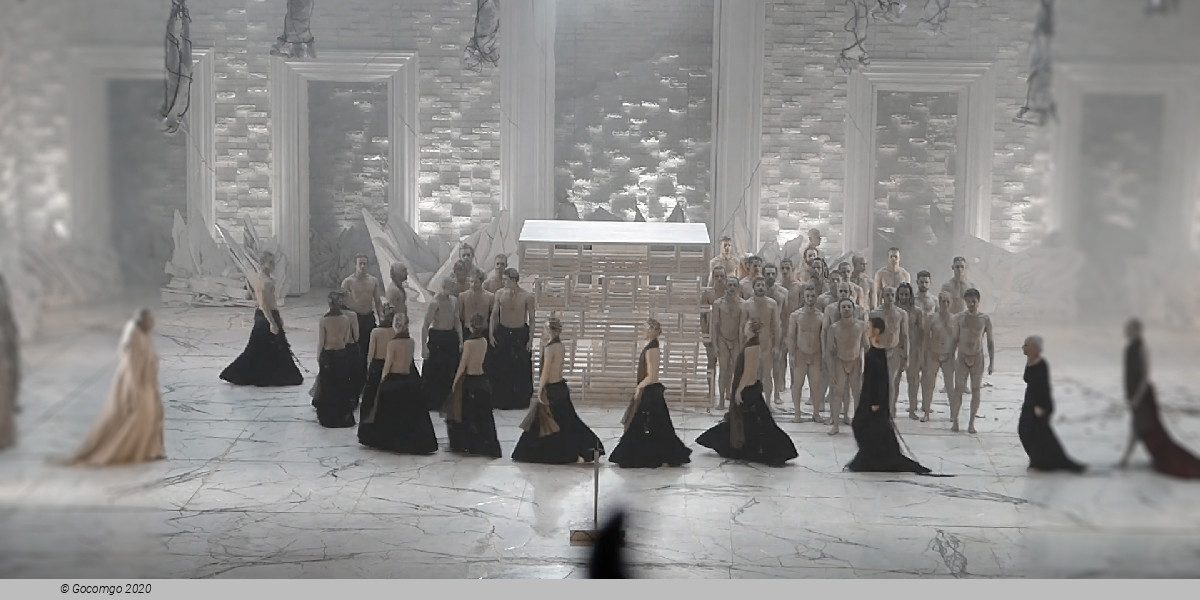
Deutsche Oper Berlin: Thaïs (concert version) Tickets | Event Dates & Schedule | GoComGo.com

Thaïs (concert version) Tickets

Deutsche Oper Berlin, Berlin, Germany
Important Info
Type: Opera
City: Berlin, Germany
Duration: 2h 45min with 1 interval
Acts: 3
Intervals: 1
Sung in: French
Titles in: German,English

E-tickets: Print at home or at the box office of the event if so specified. You will find more information in your booking confirmation email.

You can only select the category, and not the exact seats.
If you order 2 or 3 tickets: your seats will be next to each other.
If you order 4 or more tickets: your seats will be next to each other, or, if this is not possible, we will provide a combination of groups of seats (at least in pairs, for example 2+2 or 2+3).

Cast
Performers
Choose the date to see the peformers
Overview

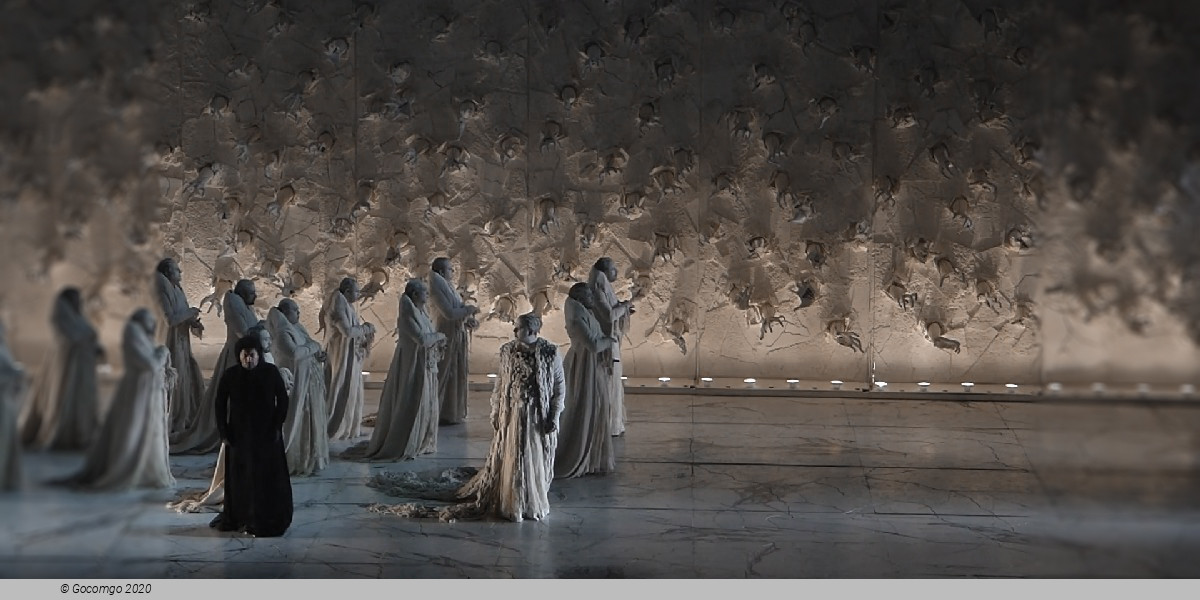
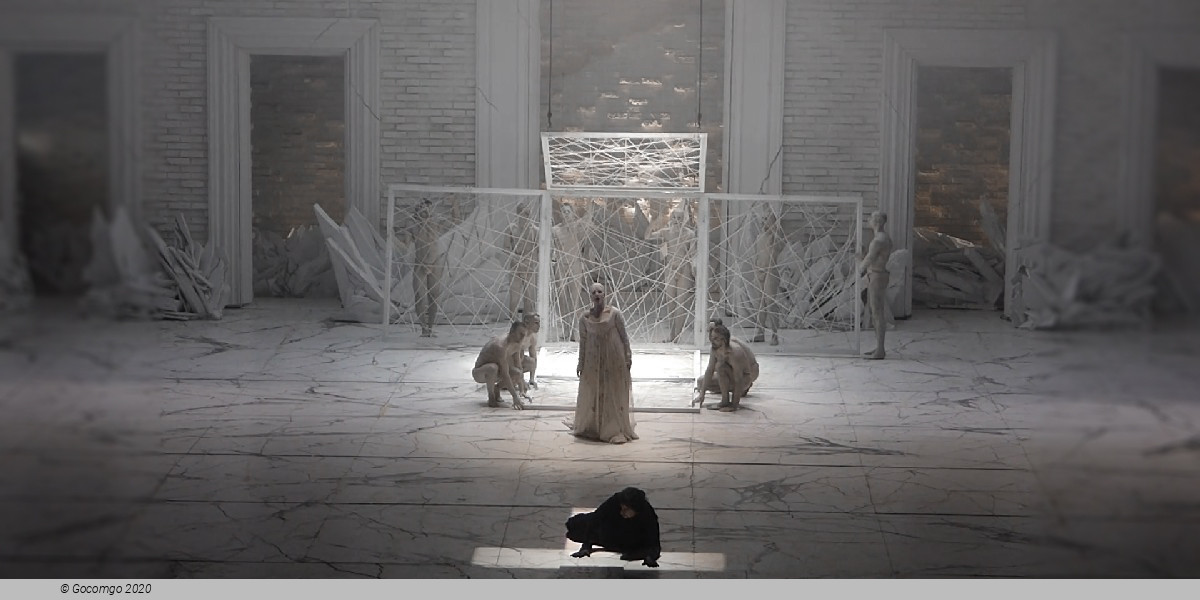
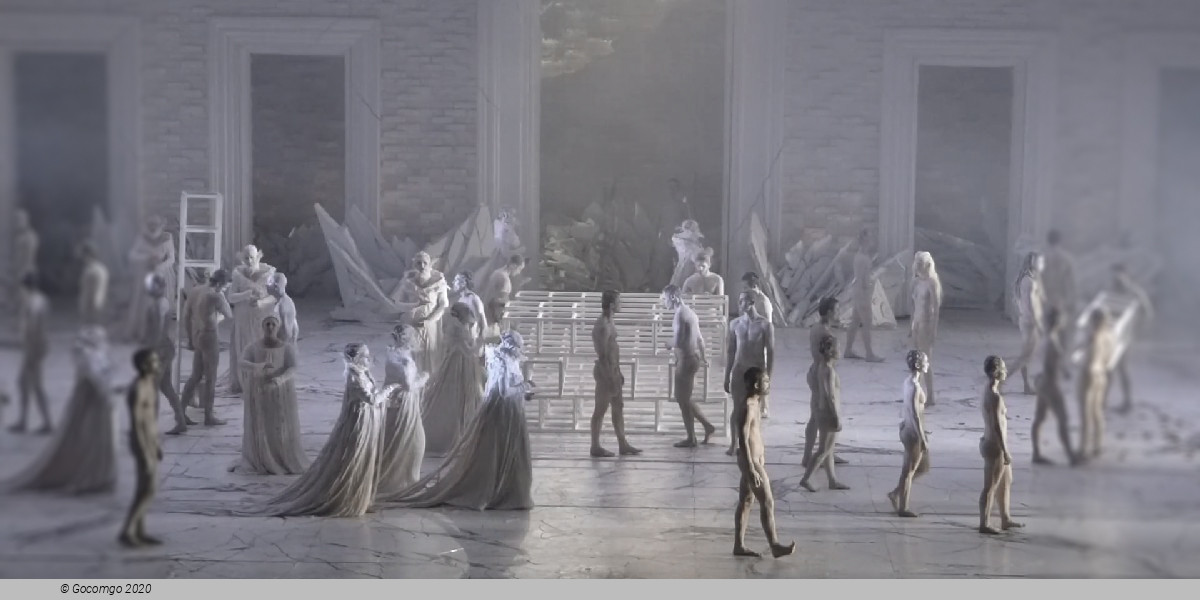
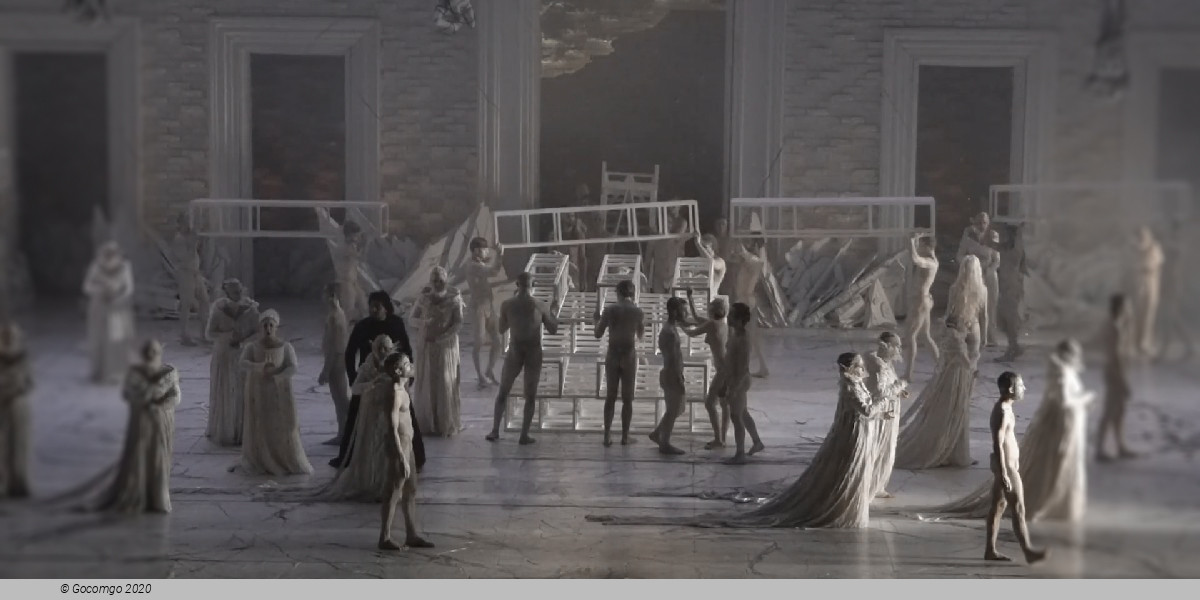
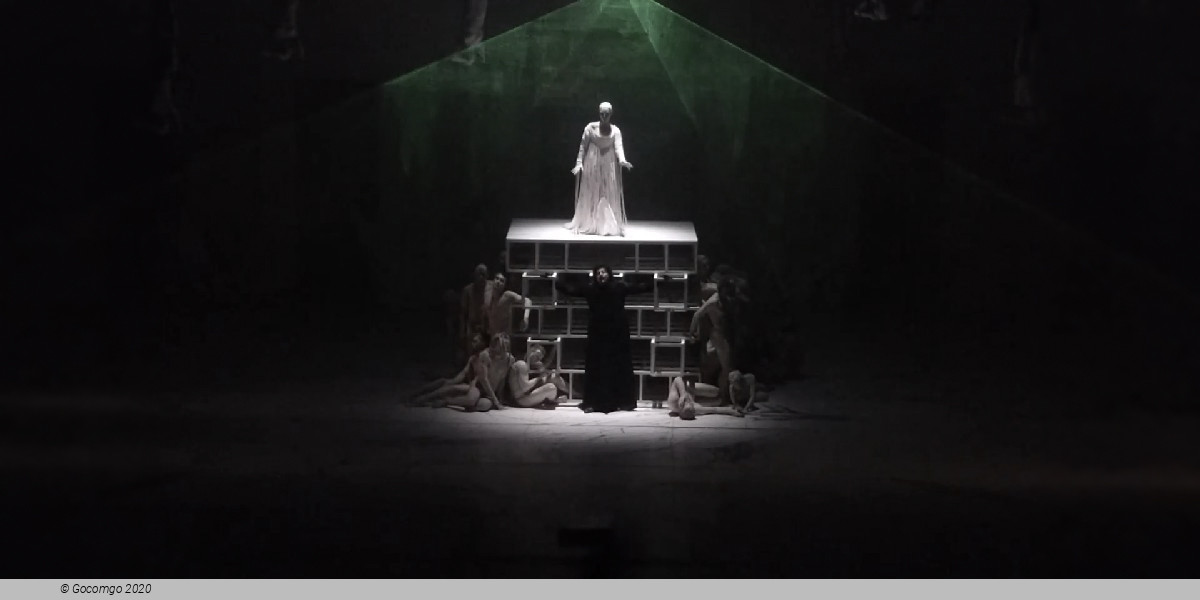
The plot is similar to that of SALOME: an Egyptian hetaera puts the aesthetic ideal of the monk Athanaël to the test. With the promise of eternal life he is able to lead the beautiful woman on the Christian path of virtue – only to discover that he himself nurtures anything but innocent feelings for the converted courtesan. The Egyptian exoticism and the (in)famous dance scene at the end of the first act, in which Thaïs seductively bares all, gave this work, originally performed in 1894, its scandalous reputation. Yet despite the great success of the revised second version, THAIS could not be included in the repertoire: the extreme vocal requirements prove difficult to cast for even large opera houses to this day. The lead role of Thaïs herself is considered one of the most demanding soprano roles in opera history, in which only exceptional talents shine unscathed.

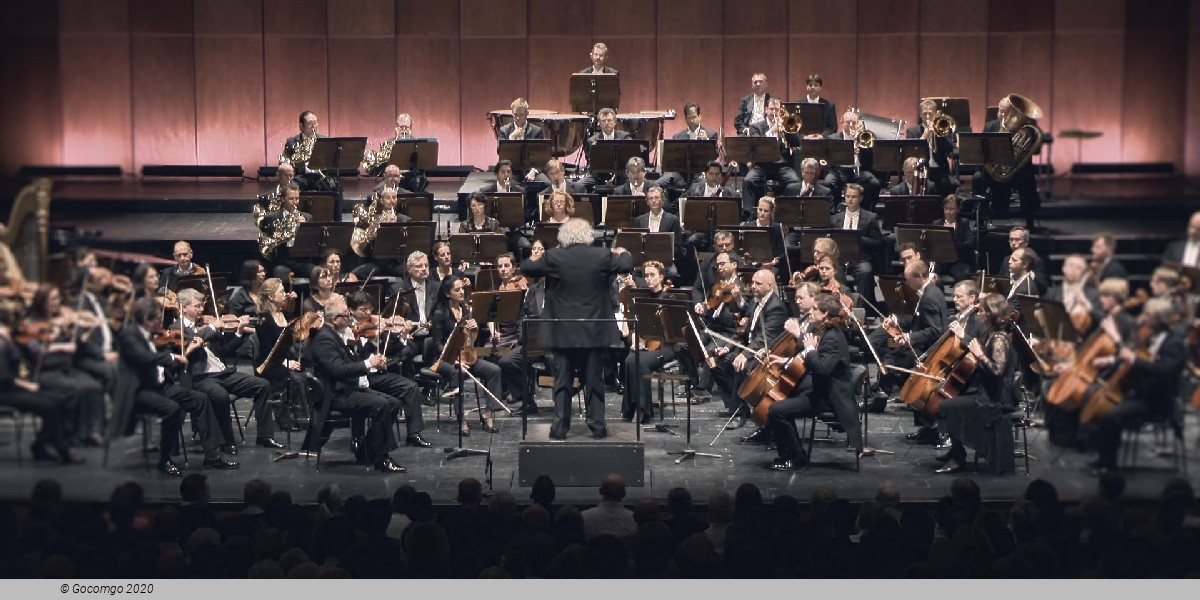
Young Australian soprano Nicole Car is one of the most important singers of her generation. With her equally moving and virtuosic interpretation of Fiordiligi in COSI FAN TUTTE, or as Tatyana in EUGENE ONEGIN, she has been able to confirm her reputation time and again at the Deutsche Oper Berlin. It is thus no surprise that the extreme role of Thaïs is already in her proven repertoire. Her husband Etienne Dupuis in the role of Athanaël may find it all the easier to fall in love with the beautiful hetaera. The concert performances by Massenet's master singing work will be conducted by young Australian Nicholas Carter, who began his international career at the Deutsche Oper Berlin.

History
Premiere of this production: 16 March 1894, Opéra Garnier, Paris

Thaïs is an opera, a comédie lyrique in three acts and seven tableaux, by Jules Massenet to a French libretto by Louis Gallet, based on the novel Thaïs by Anatole France. It was first performed at the Opéra Garnier in Paris on 16 March 1894, starring the American soprano Sibyl Sanderson, for whom Massenet had written the title role. The original production was directed by Alexandre Lapissida, with costumes designed by Charles Bianchini and sets by Marcel Jambon (act 1, scene 1; act 3) and Eugène Carpezat (act 1, scene 2; act 2). The opera was later revised by the composer and was premiered at the same opera house on 13 April 1898.

Synopsis

Act 1

Scene 1

A group of Cenobite monks go about their daily business. Athanaël, the most rigorous ascetic of them all, enters and confesses to the senior monk, Palémon, that he has lately been disturbed by visions of a courtesan and priestess of Venus named Thaïs, whom he had seen many years ago in his native city of Alexandria. Believing these visions to be a sign from God, he resolves, against Palémon's advice, to return to Alexandria, convert Thaïs to Christianity, and persuade her to enter a convent.

Scene 2

Athanaël arrives in Alexandria and visits his old friend Nicias, a wealthy voluptuary. Nicias welcomes him with open arms and reveals himself to be Thaïs's current lover. Upon hearing Athanaël's plan, he laughs and warns him that the revenge of Venus can be terrible. Nevertheless, he procures clothing for his friend in preparation for a feast that evening at which Thaïs will appear. His slaves, Crobyle and Myrtale, dress Athanaël and mock his prudery.

The feast begins. Thaïs arrives and sings a bittersweet love duet with Nicias: this is their last night together. She then asks him about Athanaël, who overhears her and tells her that he has come to teach her "contempt for the flesh and love of pain." Not tempted by this proposition, she offends his sense of propriety with a seductive song. He leaves, angrily promising to come back later, while she taunts him with a parting shot: "Dare to come, you who defy Venus!" and begins to disrobe as the curtain falls.

Act 2

Scene 1

Exhausted after the feast, Thaïs expresses dissatisfaction with her empty life and muses on the fact that one day, old age will destroy her beauty. Athanaël enters at this vulnerable moment, praying to God to conceal her beauty from him. He tells her that he loves her according to the spirit rather than the flesh, and that his love will last forever instead of a single night. Intrigued, she asks him to teach her the ways of this love. He nearly succumbs to her physical charm, but succeeds in explaining to her that if she converts, she will gain eternal life. She nearly succumbs to his eloquence, but then reasserts her nihilistic worldview and drives him away. However, after a long meditation she changes her mind.

Scene 2

Thaïs has joined Athanaël and resolved to follow him into the desert. He orders her to burn down her house and possessions in order to destroy all traces of her wicked past. She agrees, but asks if she can keep a statuette of Eros, the god of love, explaining to Athanaël that she sinned against love rather than through it. When he hears that Nicias gave it to her, however, Athanaël demands that she destroy it. Nicias appears with a group of revelers, who see Athanaël taking Thaïs away. Furious, they begin to stone him. Although Nicias is astonished at Thaïs' decision to leave, he respects it and throws handfuls of money to distract the crowd. Thaïs and Athanaël escape.

Act 3

Scene 1

Thaïs and Athanaël travel on foot through the desert. Thaïs is exhausted, but Athanaël forces her to keep going and thus do penance for her sins. They reach a spring, where Athanaël begins to feel pity rather than disgust for her, and they share a few moments of idyllic, platonic companionship as they rest. Shortly afterwards, they reach the convent where Thaïs is to stay. Placing her in the care of Mother Superior Albine, Athanaël realizes that he has accomplished his mission — and that he will never see her again.

Scene 2

The Cenobite monks express anxiety over Athanaël's asocial and morose behavior since his return from Alexandria. Athanaël enters and confesses to Palémon that he has begun to experience sexual longing for Thaïs. Palémon castigates him for having attempted to convert her in the first place. Athanaël falls into a depressed sleep and has an erotic vision of Thaïs. He tries to seize her, but she laughingly evades him. Then, a second vision tells him that Thaïs is dying.

Scene 3

Feeling that existence is worth nothing without her, he repudiates all his vows and rushes off to find her. He reaches the convent and finds her on her deathbed. He tells her that all he taught her was a lie, that "nothing is true but life and the love of human beings", and that he loves her. Blissfully unaware, she describes the heavens opening and the angels welcoming her into their midst. She dies, and Athanaël collapses in despair.

Venue Info

Deutsche Oper Berlin - Berlin
Location   Bismarckstraße 35

The Deutsche Oper Berlin is an opera company located in the Charlottenburg district of Berlin, Germany. The resident building is the country's second-largest opera house and also home to the Berlin State Ballet. Since 2004 the Deutsche Oper Berlin, like the Staatsoper Unter den Linden (Berlin State Opera), the Komische Oper Berlin, the Berlin State Ballet, and the Bühnenservice Berlin (Stage and Costume Design), has been a member of the Berlin Opera Foundation.

The company's history goes back to the Deutsches Opernhaus built by the then independent city of Charlottenburg—the "richest town of Prussia"—according to plans designed by Heinrich Seeling from 1911. It opened on November 7, 1912 with a performance of Beethoven's Fidelio, conducted by Ignatz Waghalter. In 1925, after the incorporation of Charlottenburg by the 1920 Greater Berlin Act, the name of the resident building was changed to Städtische Oper (Municipal Opera).

With the Nazi seizure of power in 1933, the opera was under control of the Reich Ministry of Public Enlightenment and Propaganda. Minister Joseph Goebbels had the name changed back to Deutsches Opernhaus, competing with the Berlin State Opera in Mitte controlled by his rival, the Prussian minister-president Hermann Göring. In 1935, the building was remodeled by Paul Baumgarten and the seating reduced from 2300 to 2098. Carl Ebert, the pre-World War II general manager, chose to emigrate from Germany rather than endorse the Nazi view of music, and went on to co-found the Glyndebourne opera festival in England. He was replaced by Max von Schillings, who acceded to enact works of "unalloyed German character". Several artists, like the conductor Fritz Stiedry and the singer Alexander Kipnis, followed Ebert into emigration. The opera house was destroyed by a RAF air raid on 23 November 1943. Performances continued at the Admiralspalast in Mitte until 1945. Ebert returned as general manager after the war.

After the war, in what was now West Berlin, the company, again called Städtische Oper, used the nearby Theater des Westens; its opening production was Fidelio, on 4 September 1945. Its home was finally rebuilt in 1961 but to a much-changed, sober design by Fritz Bornemann. The opening production of the newly named Deutsche Oper, on 24 September, was Mozart's Don Giovanni.

Past Generalmusikdirektoren (GMD, general music directors) have included Bruno Walter, Kurt Adler, Ferenc Fricsay, Lorin Maazel, Gerd Albrecht, Jesús López-Cobos, and Christian Thielemann. In October 2005, the Italian conductor Renato Palumbo was appointed GMD as of the 2006/2007 season. In October 2007, the Deutsche Oper announced the appointment of Donald Runnicles as their next Generalmusikdirektor, effective August 2009, for an initial contract of five years. Simultaneously, Palumbo and the Deutsche Oper mutually agreed to terminate his contract, effective November 2007.

On the evening of 2 June 1967, Benno Ohnesorg, a student taking part in the German student movement, was shot in the streets around the opera house. He had been protesting against the visit to Germany by the Shah of Iran, who was attending a performance of Mozart's The Magic Flute.

In 1986 the American Berlin Opera Foundation was founded.

In April 2001, the Italian conductor Giuseppe Sinopoli died at the podium while conducting Verdi's Aida, at age 54.

In September 2006, the Deutsche Oper's Intendantin (general manager) Kirsten Harms drew criticism after she cancelled the production of Mozart's opera Idomeneo by Hans Neuenfels, because of fears that a scene in it featuring the severed heads of Jesus, Buddha and Muhammad would offend Muslims, and that the opera house's security might come under threat if violent protests took place. Critics of the decision include German Ministers and the German Chancellor Angela Merkel. The reaction from Muslims has been mixed — the leader of Germany's Islamic Council welcomed the decision, whilst a leader of Germany's Turkish community, criticising the decision, said:

This is about art, not about politics ... We should not make art dependent on religion — then we are back in the Middle Ages.

At the end of October 2006, the opera house announced that performances of Mozart's opera Idomeneo would then proceed. Kirsten Harms, after announcing in 2009 that she would not renew her contract beyond 2011, was bid farewell in July of that year.

Important Info
Type: Opera
City: Berlin, Germany
Duration: 2h 45min with 1 interval
Acts: 3
Intervals: 1
Sung in: French
Titles in: German,English

E-tickets: Print at home or at the box office of the event if so specified. You will find more information in your booking confirmation email.

You can only select the category, and not the exact seats.
If you order 2 or 3 tickets: your seats will be next to each other.
If you order 4 or more tickets: your seats will be next to each other, or, if this is not possible, we will provide a combination of groups of seats (at least in pairs, for example 2+2 or 2+3).

Top of page