
Teatro Real 30 March 2023 - The Nose | GoComGo.com

The Nose

Teatro Real, Main Auditorium, Madrid, Spain
All photos (6)
Select date and time
7:30 PM

E-tickets: Print at home or at the box office of the event if so specified. You will find more information in your booking confirmation email.

You can only select the category, and not the exact seats.
If you order 2 or 3 tickets: your seats will be next to each other.
If you order 4 or more tickets: your seats will be next to each other, or, if this is not possible, we will provide a combination of groups of seats (at least in pairs, for example 2+2 or 2+3).

Important Info
Type: Opera
City: Madrid, Spain
Starts at: 19:30
Acts: 3

E-tickets: Print at home or at the box office of the event if so specified. You will find more information in your booking confirmation email.

You can only select the category, and not the exact seats.
If you order 2 or 3 tickets: your seats will be next to each other.
If you order 4 or more tickets: your seats will be next to each other, or, if this is not possible, we will provide a combination of groups of seats (at least in pairs, for example 2+2 or 2+3).

Overview

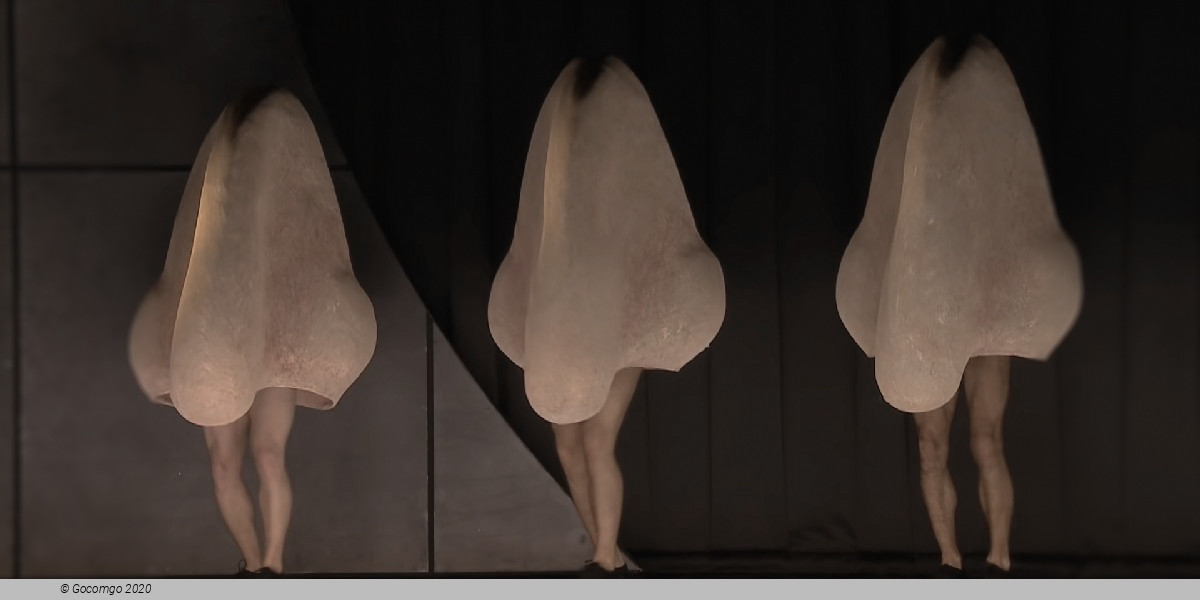
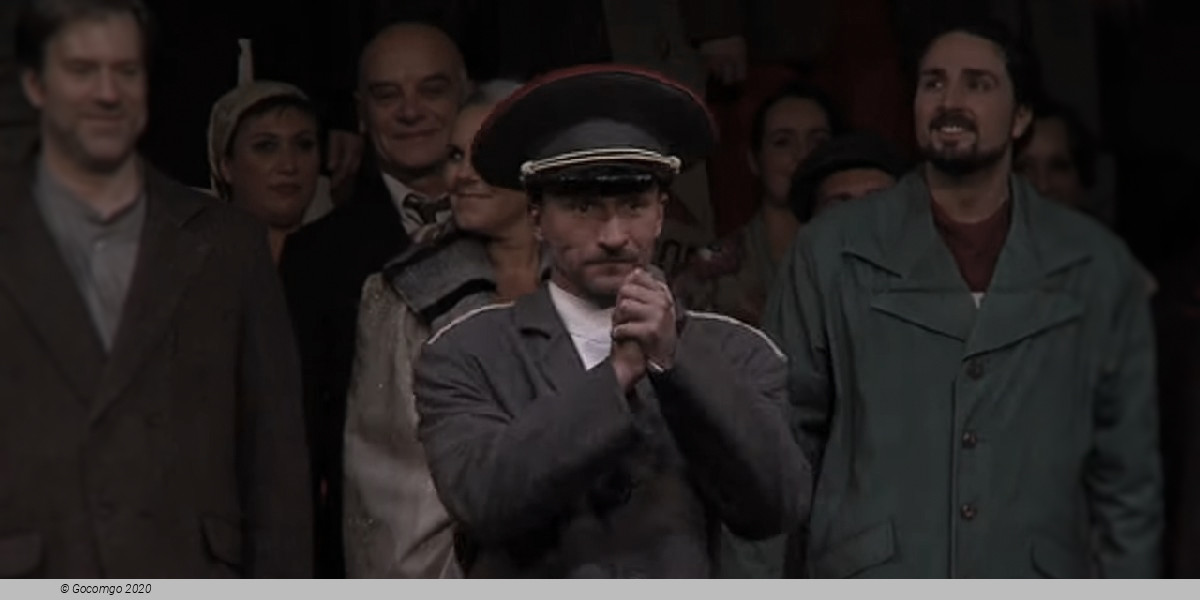
The debut in the Teatro Real of this cult opera arrives with the acclaimed and irreverent production of Australian Barrie Kosky -  who staged the most recent Magic Flute at this theatre -,  who has been a fan of this work since his student years. The staging communicates the grotesque mishaps of a grey and pompously bureaucrat who is the  lead character.

With a cast of 89 roles - spread among a no less gigantic of 33 singers – and a rhythmical action which is nearly cinematographic, The Nose is a huge challenge for any opera house because of its logistic complexities and an exhilarating “nightmare” for its Stage Director. Based on a story by Nikolai Gogol and premiered in Leningrad in 1930, the work was put out of circulation due to the attacks of the Russian Association of Proletarian Musicians. The opera was not seen on stage again until 1974, just a year before the composer’s death. The sarcasm -  bordering on  Theatre  of the Absurd – of its libretto and  the “ music without musical structure” score,  influenced  by the  biomechanics of Meyerhold, sustain a spectacle which  is as acid in content as it is wildly modern musically.

New production of the Teatro Real, in collaboration with the Royal Opera House, Komische Oper Berlin and Opera Australia

History
Premiere of this production: 18 January 1930, Leningrad Maly Operny

The Nose is Dmitri Shostakovich's first opera, a satirical work completed in 1928 based on Nikolai Gogol's story of the same name (1836).

Synopsis

Opera in 3 acts and 10 scenes, without intermission

Act 1

Prologue

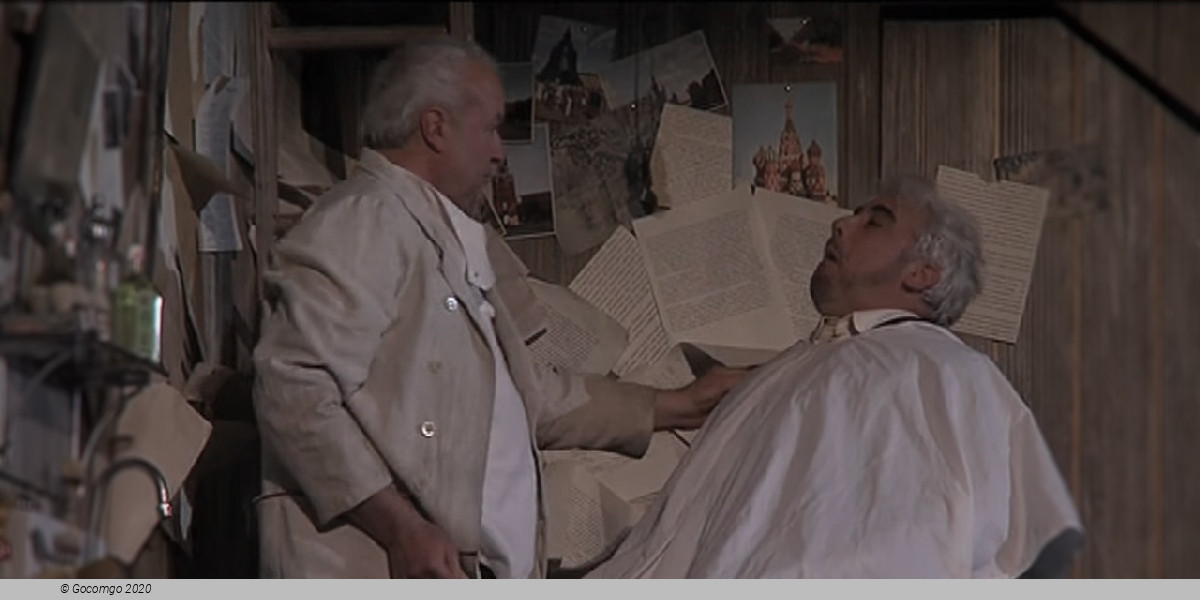
St Petersburg. Kovalyov, a Collegiate Assessor is being shaved by Ivan Yakovlevich (a barber). He is one of Yakovlevich's regular customers.

The next morning, Yakovlevich finds a nose in his bread. His wife, believing he has cut off one of his customers' noses, requests him to dispose of it. He tries to dispose of it in the street, but is foiled by running into people he knows, then he throws it into the Neva River, but he is seen by a police officer and taken away for questioning. Meanwhile, Kovalyov wakes and finds his nose missing. His first reaction is disbelief, then shock, and he sets out to find it. He later sees his nose praying in the Kazan Cathedral, now the size of a human being. Since the nose has acquired a higher rank (State Councillor) than he, it refuses to have any dealings with him, and leaves.

Act 2

In his search, Kovalyov finds himself at the Chief of Police's apartment, but he is not at home. Next he visits the newspaper office to place an advertisement about the loss of his nose, where they are dealing with a missing dog. After explaining his loss, his request is refused on the grounds of the newspaper's reputation. Upon demonstrating his loss, the clerk suggests he tell his story. Kovalyov feels insulted and leaves.

He returns to his apartment, where his servant is playing the balalaika, he dismisses him and wallows in self-pity.

Act 3

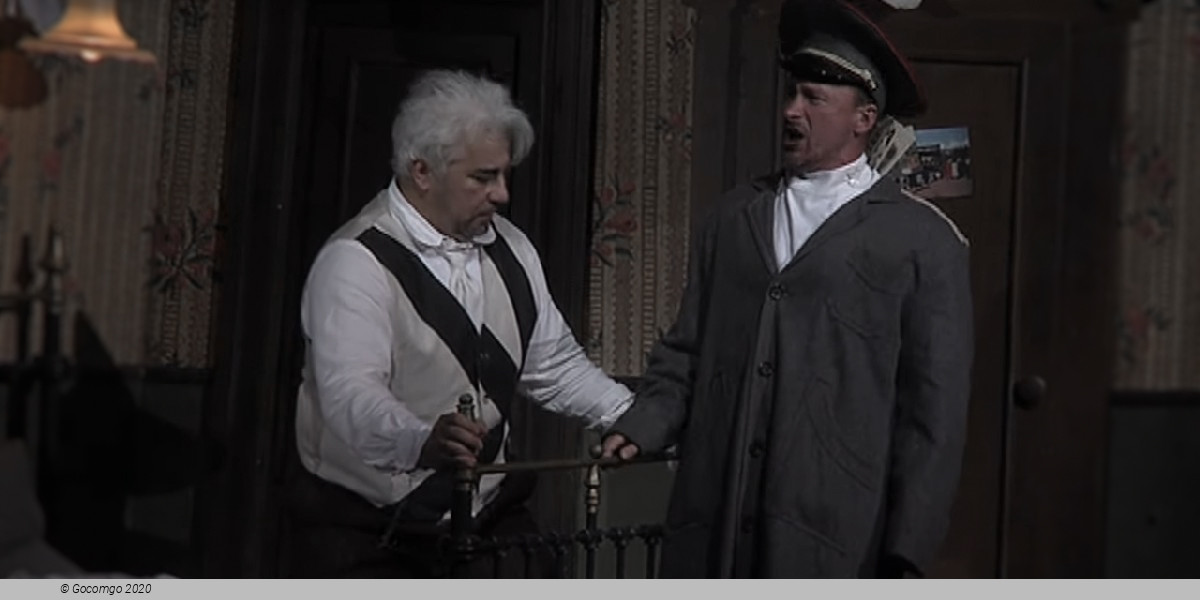
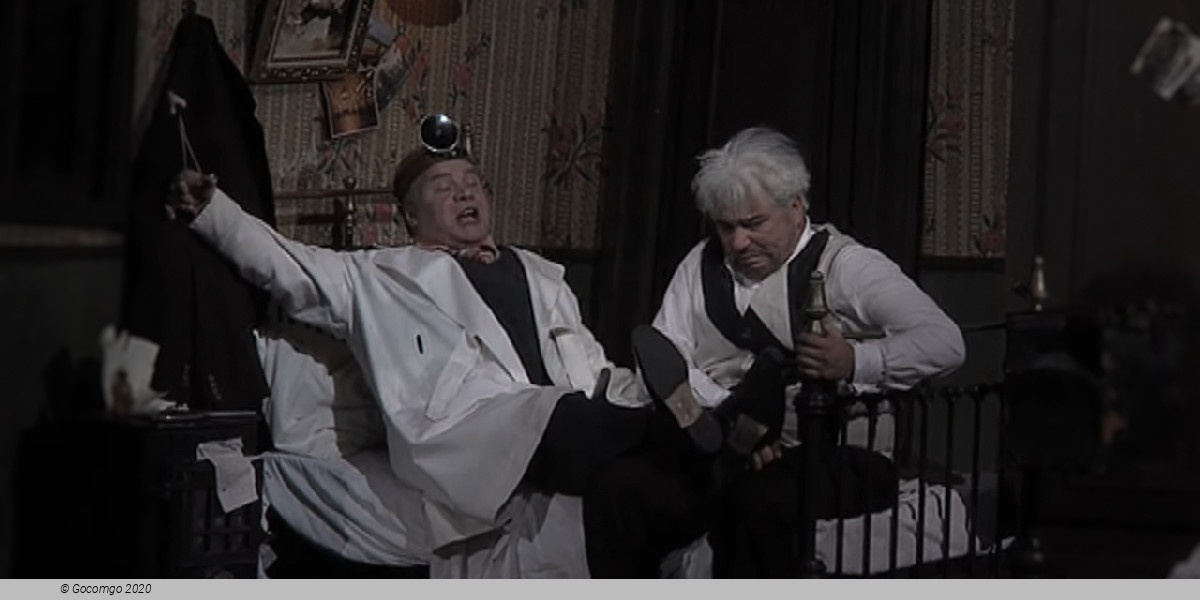
The police take up the search. A group of policemen are at a railway station, in order to prevent the nose from escaping, where an inspector rallies them. The nose runs in and tries to stop the train, and a general pursuit ensues, resulting in its capture. The nose is then beaten into its normal size, wrapped and returned to Kovalyov by the inspector, but Kovalyov is unable to reattach it. Nor can a doctor. He then suspects that he has been placed under a spell by a woman called Madame Podtochina, because he would not marry her daughter. He writes to ask her to undo the spell, but she misinterprets the letter as a proposal to her daughter. She convinces him that she is innocent. In the city, crowds fuelled by rumours gather in search of the nose till the police restore order.

Epilogue

Kovalyov wakes up with his nose reattached, and dances a polka in joy. Yakovlevich has been released from prison and arrives to shave him. Afterwards Kovalyov wanders along Nevsky Prospekt greeting acquaintances, while people discuss the story.

Venue Info

Teatro Real - Madrid
Location   Isabel II Square, s / n.

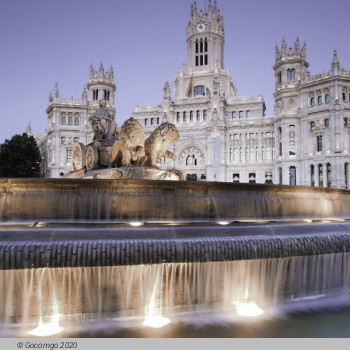
Teatro Real is a major opera house located in Madrid. Today the Teatro Real opera is one of the great theaters of Europe hosting large productions involving leading international figures in opera singing, musical direction, stage direction, and dance. Founded in 1818 and inaugurated on 19 November 1850, it closed in 1925 and reopened in 1966. Beginning in 1988 it underwent major refurbishing and renovation works and finally reopened in 1997 with a capacity of 1,746 seats. The theater offers visitors guided tours in several languages, including the auditorium, stage, workshops, and rehearsal rooms.

Founded by King Ferdinand VII in 1818, and after thirty-two years of planning and construction, a Royal Order on 7 May 1850 decreed the immediate completion of the "Teatro de Oriente" and the building works were finished within five months. The Opera House, located just in front of the Palacio Real, the official residence of the Queen who ordered the construction of the theatre, Isabel II, was finally inaugurated on 19 November 1850, with Donizetti's La Favorite.

The Teatro soon became one of the most prestigious opera houses in Europe. For over five decades it hosted the most renowned singers and composers of the time. In the early period, it saw famous opera singers such as Alboni, Frezzolini, Marietta Gazzaniga, Rosina Penco, Giulia Grisi, Giorgio Ronconi, Italo Gardoni, Mario de Candia and Antonio Selva among many others. In 1863, Giuseppe Verdi visited the theatre for the Spanish premiere of his La Forza del Destino. At its peak, in the last quarter of the 19th century, the Teatro hosted world renowned artists such as Adela Borghi, Marie Sasse, Adelina Patti, Christina Nilsson, Luisa Tetrazzini, Mattia Battistini, Julián Gayarre, Angelo Masini, Francesco Tamagno and Enrico Tamberlick. In 1925, the Ballets Russes of Diaghilev performed in the theatre with the presence of Nijinsky and Stravinsky.

From 1867 to 1925 the Teatro Real also housed the Madrid Royal Conservatory. In December of 1925 a Royal Order ordered its activities to be discontinued owing to the damage that the construction of the Metro de Madrid had caused to the building. The government set out to restore it and ordered numerous projects to be drawn out for its renovation, such as that from architect Urdanpilleta Flórez, who proposed a monumental remodeling of the building. However, financial difficulties prevented the completion of these projects and led to a simple restoration, sponsored by the Juan March Institute, and carried out first by the architect Manuel Gonzalez Valcárcel, and later by architects Miguel Verdú Belmonte and Francisco Rodriguez Partearroyo.

The theatre reopened in 1966 as a concert hall as well as the main concert venue for the Spanish National Orchestra and the RTVE Symphony Orchestra. The reopening was celebrated with a concert of the Spanish National Orchestra conducted by Rafael Frühbeck de Burgos, and the Orfeón Donostiarra. In 1969, the 14th Eurovision Song Contest was held at the theatre, featuring an onstage metal sculpture created by surrealist Spanish artist Salvador Dalí.

Important Info
Type: Opera
City: Madrid, Spain
Starts at: 19:30
Acts: 3
Top of page