
Teatro Real 6 March 2020 - Three Tales | GoComGo.com

Three Tales

Teatro Real, Madrid, Spain
All photos (5)
Select date and time
8:30 PM
Request for Tickets
Important Info
Type: Composition
City: Madrid, Spain
Starts at: 20:30
Acts: 3
Sung in: English
Titles in: English,Spanish

E-tickets: Print at home or at the box office of the event if so specified. You will find more information in your booking confirmation email.

You can only select the category, and not the exact seats.
If you order 2 or 3 tickets: your seats will be next to each other.
If you order 4 or more tickets: your seats will be next to each other, or, if this is not possible, we will provide a combination of groups of seats (at least in pairs, for example 2+2 or 2+3).

Overview

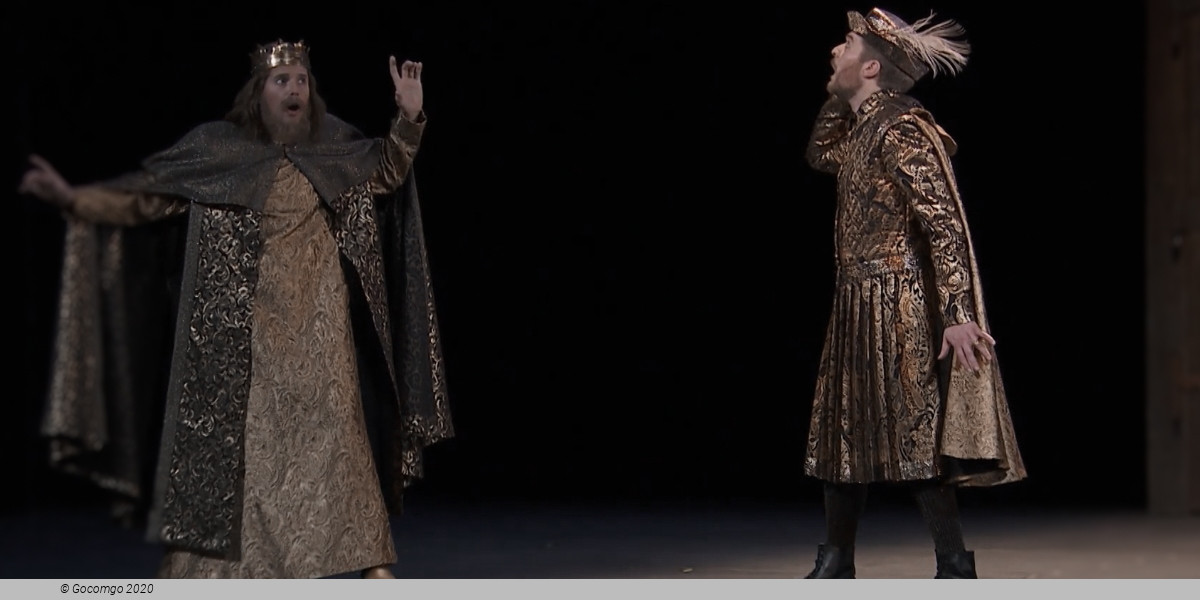
The Teatro Real embarks on a new production of Three Tales, by Steve Reich and Beryl Korot. The “Naves Matadero - Centro Internacional de Artes Vivas” will bear witness to a reflection of scientific impact on humanity.

Three independent works travel through the consequences of three scientific events of great relevance: aeronautical ambition, destructive nuclear energy, and the cloning game. Soloists of the Symphonic Orchestra of Madrid will play under the direction of Nacho de Paz.

Members Of The Titular Chorus Of The Teatro Real And Soloists Of The Titular Orchestra Of The Teatro Real.

Documentary Opera in three acts.

Music by Steve Reich (1936) for an instrumental and vocal ensemble (amplified and electronic). Video by Beryl Korot.

Premiered in the Vienna Festival the 12th of May 2002.

Premiere of the Teatro Real season.  

Cast

  • Members of the Titular Chorus of the Teatro Real
  • Soloists of the Titular Orchestra of the Teatro Real
History
Premiere of this production: 12 May 2002, Vienna Festival

Three Tales is a video-opera in three acts (titled Hindenburg, Bikini and Dolly) with music by American composer Steve Reich and visuals by Beryl Korot, his wife. It is scored for two sopranos, three tenors, string quartet, percussion, keyboards, and pre-recorded audio. Its premiere was at the Vienna Festival on May 12, 2002; the BBC had commissioned a version for television broadcast four months later. The 12-minute tale Hindenburg had been written (and recorded) in 1998, while the remaining tales were completed (and recorded) in the year of the premiere.

Synopsis

An entire century of technological revolution appears summarized in three milestones, which earmarked – each one with its own particularity- the history of humanity.

Three Tales risks in both content and format (it has very little resemblance to what the collective imagination would call a lyrical production) in order to trace an arch from daring transport to the future of our species.

In Hindenburg, is a reference to the brutal explosion of the zeppelin in Lakehurst, New Jersey in 1937.

Bikini recalls the nuclear testing done after the end of the Second World War, in which it was necessary to forcefully displace a local populated centre, which was completely unrelated to this western madness.

Dolly travels to the beginning of the race for cloning, to be followed by the conceptualization of the human body as if it were a genetic machine that could be modified at will.

The powerful images of thee Three Tales are supported by the musicians and singers just under the large screen.   This work invites us to reflect on the lights and shadows of scientific advances, whose implications, even today, are inconceivable.

The three tales (acts) divide into various sub-sections:

  • Act I – Hindenburg

It could not have been a technical matter – Nibelung Zeppelin – A very impressive thing to see – I couldn't understand It

  • Act II – Bikini

In the air I – The atoll I – On the ships I – In the air II – The atoll II – On the ships II – In the air III – The atoll III - On the ships III - Coda

  • Act III – Dolly

Cloning - Dolly - Human body machine - Darwin - Interlude - Robots/Cyborgs/Immortality

Venue Info

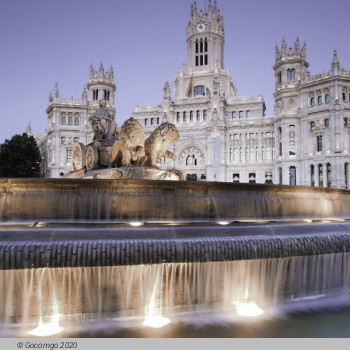
Teatro Real - Madrid
Location   Isabel II Square, s / n.

Teatro Real is a major opera house located in Madrid. Today the Teatro Real opera is one of the great theaters of Europe hosting large productions involving leading international figures in opera singing, musical direction, stage direction, and dance. Founded in 1818 and inaugurated on 19 November 1850, it closed in 1925 and reopened in 1966. Beginning in 1988 it underwent major refurbishing and renovation works and finally reopened in 1997 with a capacity of 1,746 seats. The theater offers visitors guided tours in several languages, including the auditorium, stage, workshops, and rehearsal rooms.

Founded by King Ferdinand VII in 1818, and after thirty-two years of planning and construction, a Royal Order on 7 May 1850 decreed the immediate completion of the "Teatro de Oriente" and the building works were finished within five months. The Opera House, located just in front of the Palacio Real, the official residence of the Queen who ordered the construction of the theatre, Isabel II, was finally inaugurated on 19 November 1850, with Donizetti's La Favorite.

The Teatro soon became one of the most prestigious opera houses in Europe. For over five decades it hosted the most renowned singers and composers of the time. In the early period, it saw famous opera singers such as Alboni, Frezzolini, Marietta Gazzaniga, Rosina Penco, Giulia Grisi, Giorgio Ronconi, Italo Gardoni, Mario de Candia and Antonio Selva among many others. In 1863, Giuseppe Verdi visited the theatre for the Spanish premiere of his La Forza del Destino. At its peak, in the last quarter of the 19th century, the Teatro hosted world renowned artists such as Adela Borghi, Marie Sasse, Adelina Patti, Christina Nilsson, Luisa Tetrazzini, Mattia Battistini, Julián Gayarre, Angelo Masini, Francesco Tamagno and Enrico Tamberlick. In 1925, the Ballets Russes of Diaghilev performed in the theatre with the presence of Nijinsky and Stravinsky.

From 1867 to 1925 the Teatro Real also housed the Madrid Royal Conservatory. In December of 1925 a Royal Order ordered its activities to be discontinued owing to the damage that the construction of the Metro de Madrid had caused to the building. The government set out to restore it and ordered numerous projects to be drawn out for its renovation, such as that from architect Urdanpilleta Flórez, who proposed a monumental remodeling of the building. However, financial difficulties prevented the completion of these projects and led to a simple restoration, sponsored by the Juan March Institute, and carried out first by the architect Manuel Gonzalez Valcárcel, and later by architects Miguel Verdú Belmonte and Francisco Rodriguez Partearroyo.

The theatre reopened in 1966 as a concert hall as well as the main concert venue for the Spanish National Orchestra and the RTVE Symphony Orchestra. The reopening was celebrated with a concert of the Spanish National Orchestra conducted by Rafael Frühbeck de Burgos, and the Orfeón Donostiarra. In 1969, the 14th Eurovision Song Contest was held at the theatre, featuring an onstage metal sculpture created by surrealist Spanish artist Salvador Dalí.

Important Info
Type: Composition
City: Madrid, Spain
Starts at: 20:30
Acts: 3
Sung in: English
Titles in: English,Spanish
Top of page