
Teatro Alla Scala tickets 1 July 2027 - I puritani | GoComGo.com

I puritani

Teatro Alla Scala, Milan, Italy
All photos (8)
Select date and time
8 PM
From
US$ 315

E-tickets: Print at home or at the box office of the event if so specified. You will find more information in your booking confirmation email.

You can only select the category, and not the exact seats.
If you order 2 or 3 tickets: your seats will be next to each other.
If you order 4 or more tickets: your seats will be next to each other, or, if this is not possible, we will provide a combination of groups of seats (at least in pairs, for example 2+2 or 2+3).

Important Info
Type: Opera
City: Milan, Italy
Starts at: 20:00
Acts: 3

E-tickets: Print at home or at the box office of the event if so specified. You will find more information in your booking confirmation email.

You can only select the category, and not the exact seats.
If you order 2 or 3 tickets: your seats will be next to each other.
If you order 4 or more tickets: your seats will be next to each other, or, if this is not possible, we will provide a combination of groups of seats (at least in pairs, for example 2+2 or 2+3).

Cast
Performers
Conductor: Fabio Luisi
Bass: Andrea Vittorio De Campo (Lord Gualtiero Valton)
Tenor: Galeano Salas (Lord Arturo Talbo)
Soprano: Gilda Fiume (Elvira)
Bass: Giorgi Manoshvili (Sir Giorgio Valton)
Mezzo-Soprano: Marta Pluda (Enrichetta di Francia)
Baritone: Mattia Olivieri (Sir Riccardo Forth)
Tenor: Paolo Antognetti (Sir Bruno Robertson)
Choir: Teatro alla Scala Chorus
Creators
Composer: Vincenzo Bellini
Librettist: Carlo Pepoli
Director: Davide Livermore
Overview

Vincenzo Bellini’s masterpiece, an authentic poetic manifesto of Italian Bel Canto, is performed less frequently than one might expect, also because of the extreme difficulty of the leading roles written for Giovan Battista Rubini and Giulia Grisi.

The title has been absent from La Scala since 1971, and bringing it back means reaffirming the identity of the Milanese theatre as a home of the bel canto tradition, both artistically and in terms of production. Fabio Luisi possesses, like few others, a deep knowledge of the expressive codes of this repertoire, to which Davide Livermore restores dramatic intensity and spectacular quality. A long search led to the identification of Galeano Salas as the tenor capable of tackling the forbidding role of Arturo in the spaces of the Piermarini, while Adela Zaharia returns as Elvira and Giorgi Manoshvili is Riccardo.

Teatro alla Scala New Production

History
Premiere of this production: 24 January 1835, Théâtre-Italien, Paris

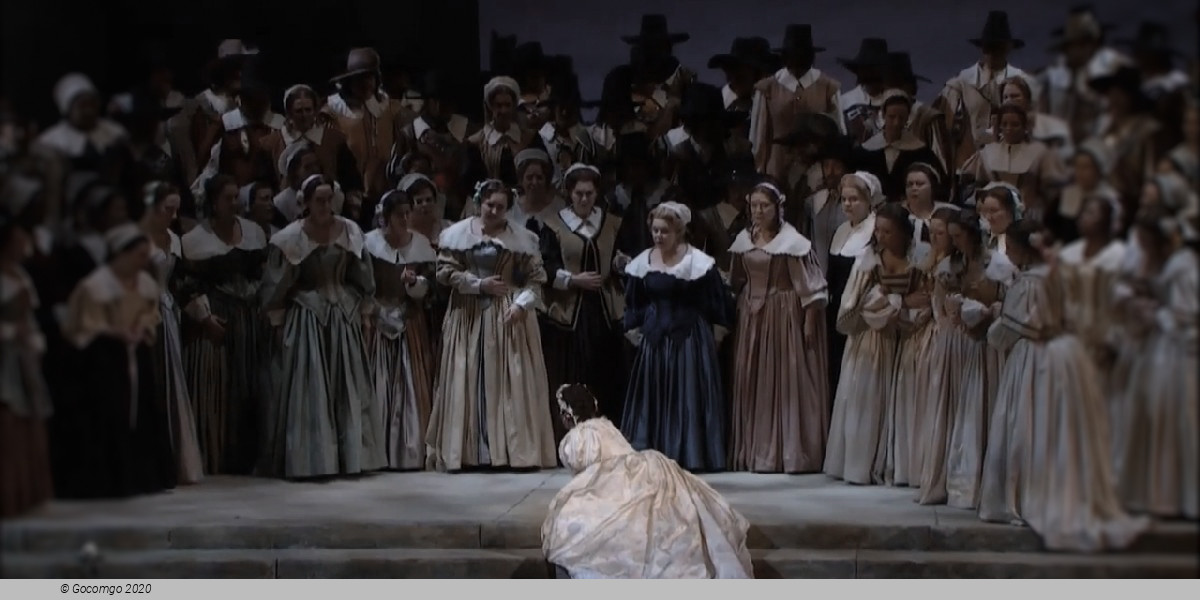
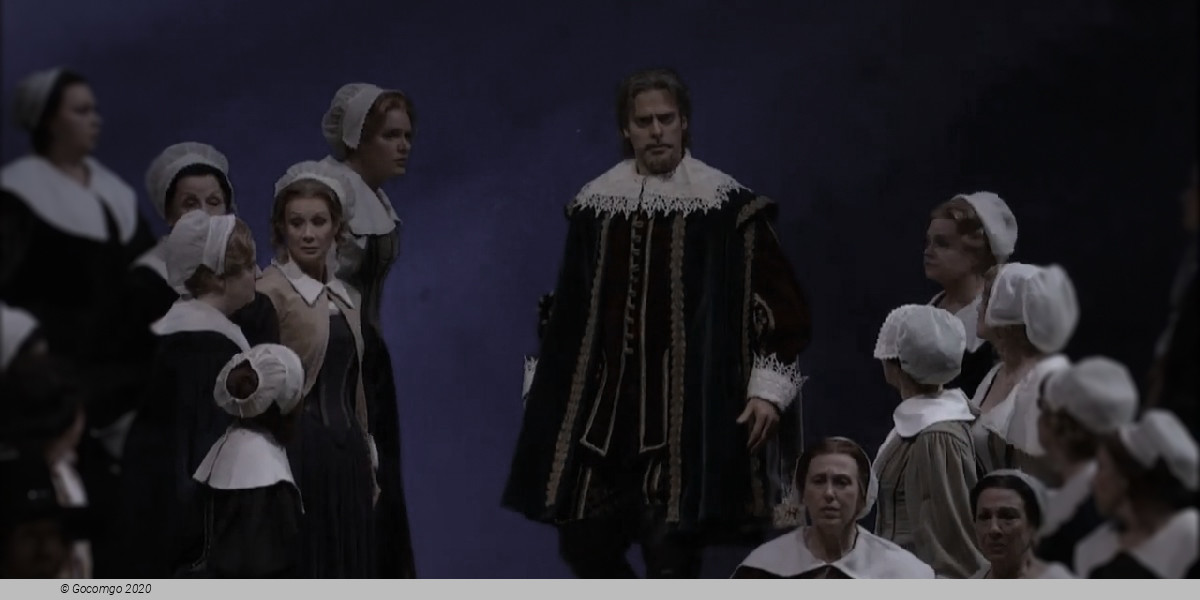
I puritani (The Puritans) is an opera by Vincenzo Bellini. It was originally written in two acts and later changed to three acts on the advice of Gioachino Rossini, with whom the young composer had become friends. The music was set to a libretto by Count Carlo Pepoli, an Italian émigré poet whom Bellini had met at a salon run by the exile Princess Belgiojoso, which became a meeting place for many Italian revolutionaries.

Synopsis

Place: England during the English Civil War
Time: 1640s

Act 1
Scene 1: A fortress near Plymouth, commanded by Lord Gualtiero Valton

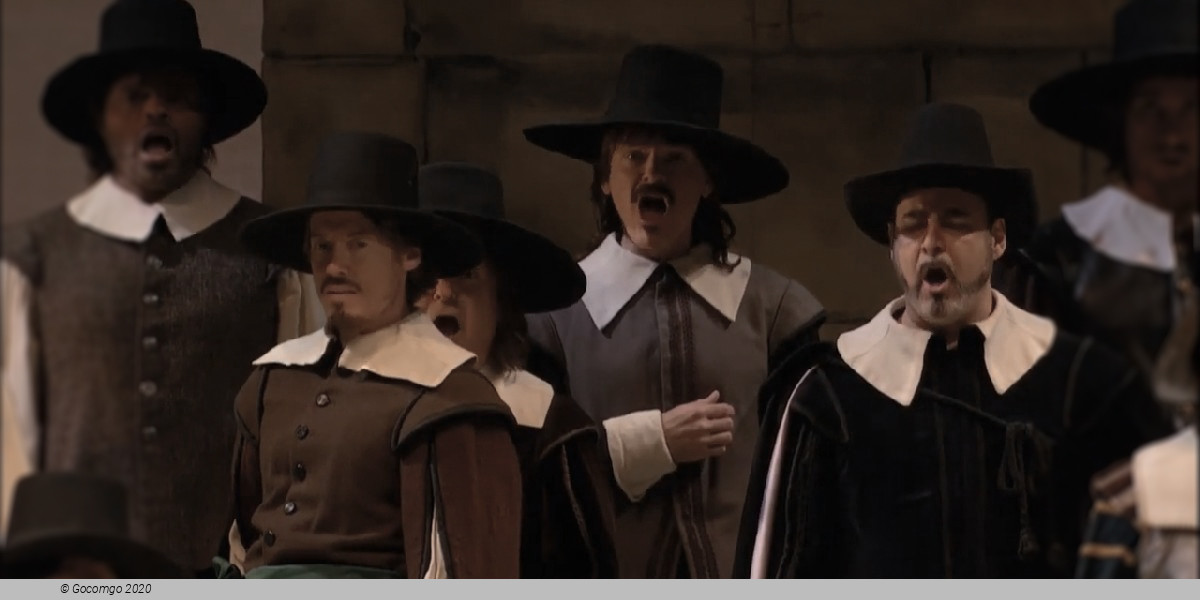
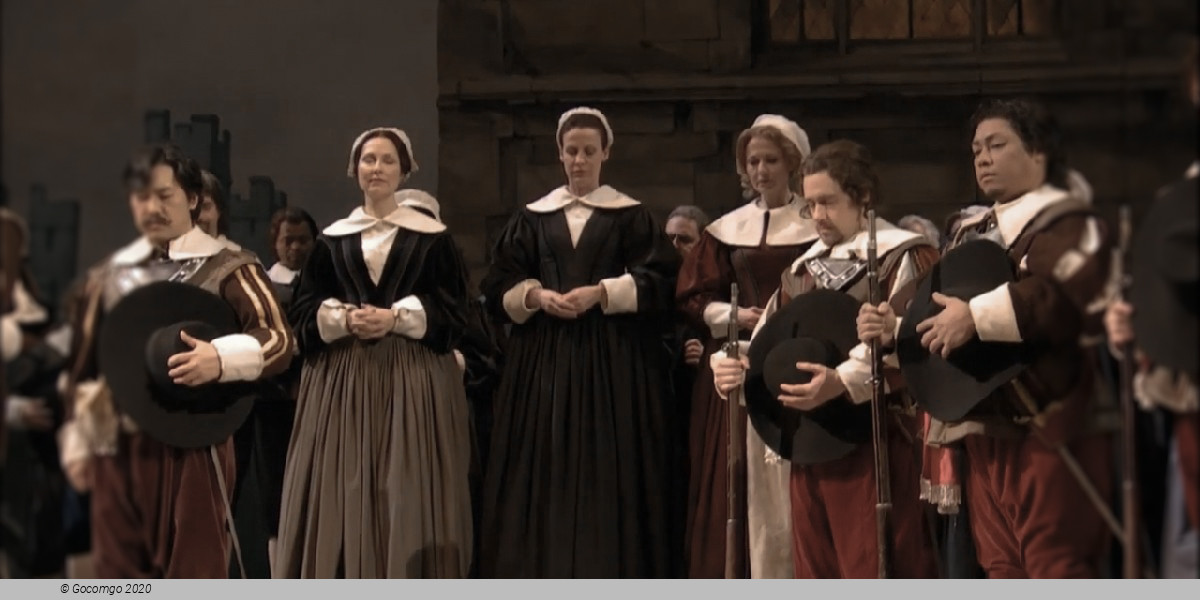
At daybreak, the Puritan soldiers gather in anticipation of victory over the Royalists. Prayers are heard from within, and then shouts of joy as the ladies and gentlemen of the castle come out announcing news of Elvira's wedding. Left alone, Riccardo shares with Bruno his plight: Riccardo had been promised Elvira's hand in marriage by her father Lord Valton but, returning to Plymouth the previous evening, he has found that she is in love with Arturo (a Royalist), and will marry him instead. He confides in Bruno. (Aria: Ah! Per sempre ...Bel sogno beato / "Ah! Forever have I lost you, flower of love, oh my hope; ah! life from now on will be full of sorrow".) As he pours out his sorrows to Bruno, Riccardo is called upon by his soldiers to lead them but he declares "I am aflame, but the flame is love, not glory".

Scene 2: Elvira's apartments

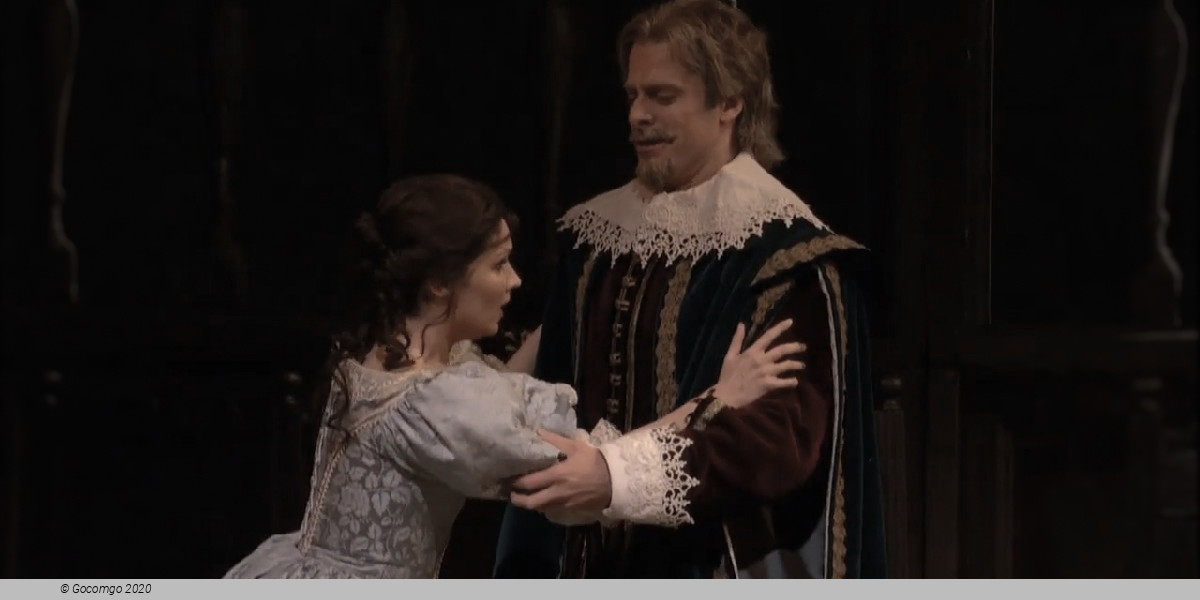
Elvira welcomes Giorgio, her uncle, with fatherly love, but when he tells her that she will soon be married, she is horror-struck. (Aria, then extended duet: Sai com'arde in petto mio / bella fiamma onnipossente / "You know that my breast burns with overwhelming passion".) She continues, stating a determination never to be married. But when Giorgio tells her that her cavalier, Arturo, will be coming, he reveals that it was he who persuaded her father, Lord Valton, to grant Elvira's wish. She is overjoyed. Then the sound of trumpets is heard announcing Arturo's arrival; he is welcomed by all.

Scene 3: The Hall of Arms

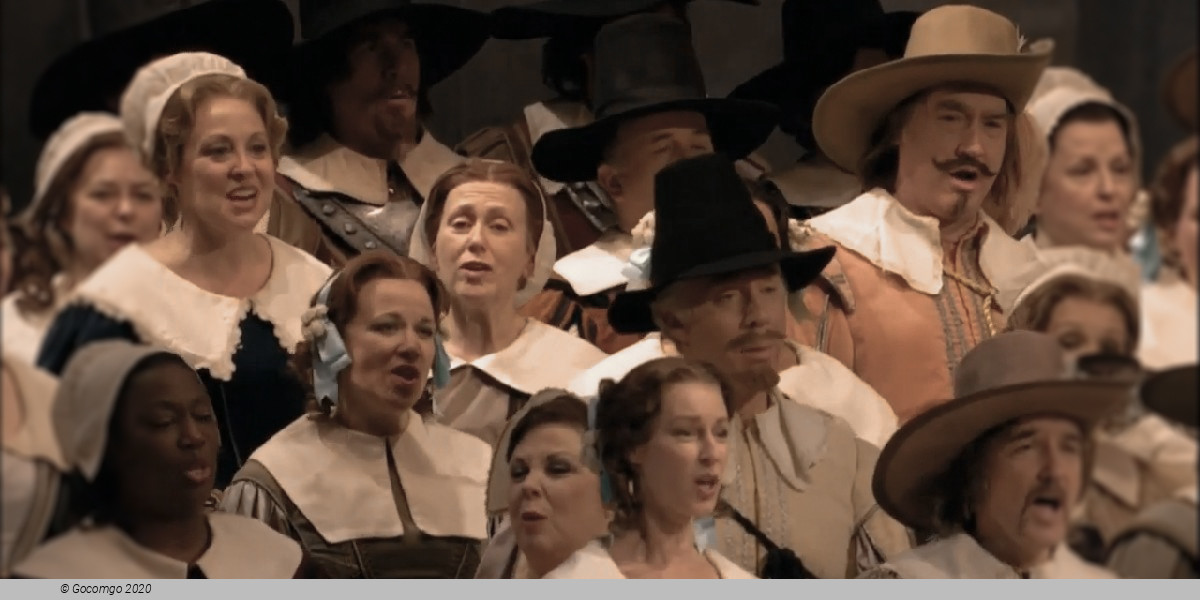
Arturo and his squires come into the hall and are joined by Elvira, Valton, Giorgio and the ladies and gentlemen of the castle. After a general welcome from all assembled, Arturo expresses his new-found happiness. (Aria, Arturo; then Giorgio and Walton; then all assembled: A te, o cara / amore talora / "In you beloved, love led me in secrecy and tears, now it guides me to your side".)

Valton tells everyone that he will not be able to attend the wedding ceremony and he provides Arturo with a safe conduct pass. A mysterious lady appears, and Valton tells her that he will be escorting her to London to appear before Parliament. Arturo is curious. Giorgio tells him that she is suspected of being a Royalist spy. As Elvira leaves to prepare herself for the wedding and the others depart in various directions, Arturo hangs back and finds the mysterious lady alone. He discovers that she is Enrichetta (Henrietta Maria), widow of the executed King Charles I. Insisting that she not be concerned about Elvira, Arturo vows to save her: (Aria, Riccardo; then Enrichetta; then together: Non parlar di lei che adoro, / di valor non mi spogliar / "Do not speak of her whom I adore; do not take away my courage. You shall be saved, oh unhappy woman.")

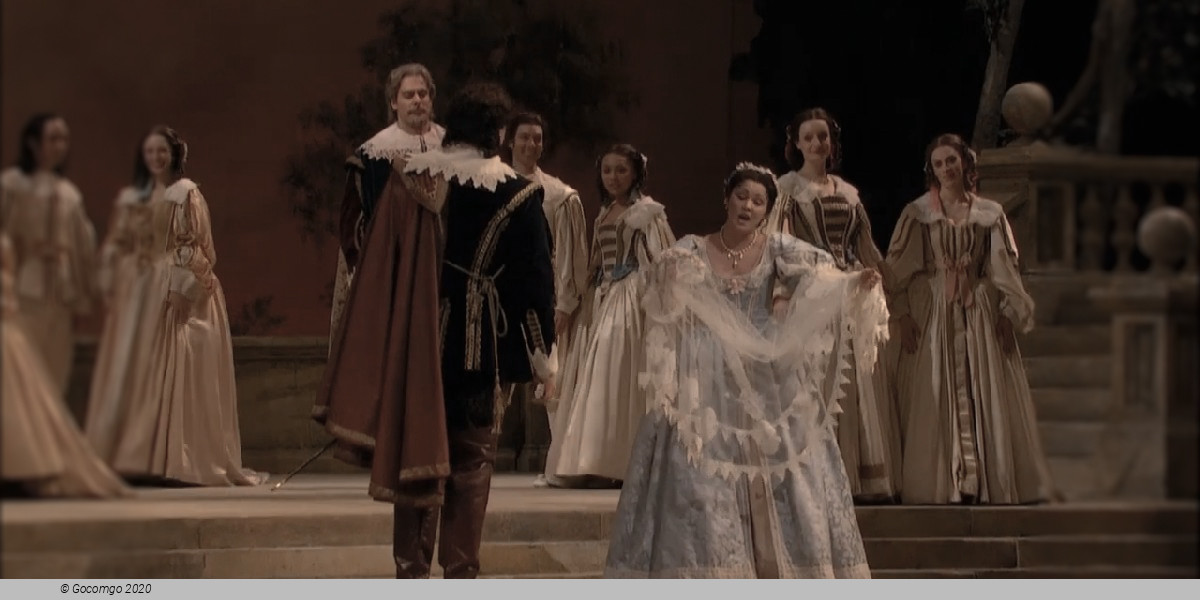
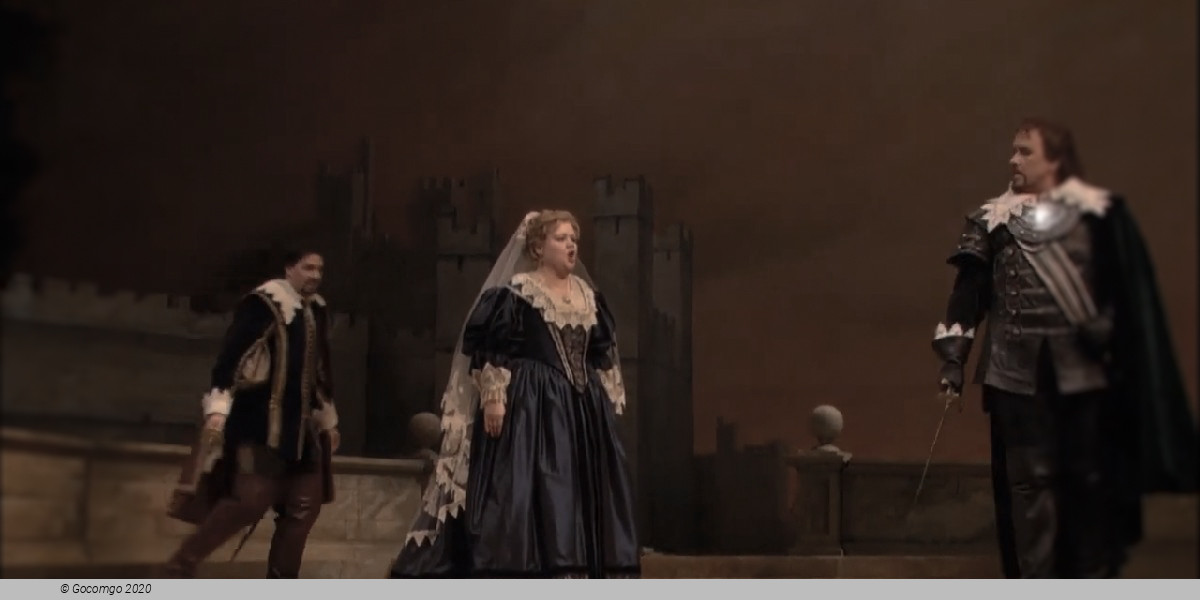
Observed by Arturo and Enrichetta, Elvira appears singing a joyful polonaise (Son vergin vezzosa / "I am a pretty maiden dressed for her wedding"), but she engages the Queen in conversation asking for help with the ringlets of her hair. To allow that to happen, she removes her wedding veil and places it over Enrichetta's head. Both Arturo and Enrichetta realise that this may allow them to escape, and as they proceed, they are challenged by Riccardo who believes the woman to be Elvira. He almost provokes a fight with Arturo until he discovers that she is not Elvira; then, he is content to allow them to pass, swearing not to reveal any information.

When the wedding party enters, they ask for Arturo, then learn, largely from Riccardo, that he has fled with Enrichetta. Pursuit is organised. Becoming increasingly distraught, Elvira believes that she sees Arturo: (Aria; then ensemble: Oh, vieni al tempio, fedele Arturo / "Ah! come, ah! come! Oh! come to the church, faithful Arturo".) It is increasingly clear that she has gone mad.

Act 2
A room in the fortress

As the ladies and gentlemen of the castle are mournful for Elvira's totally downcast state of mind, Giorgio describes her madness: (Aria: Cinta di fiori / "Garlanded with flowers and with her lovely hair disheveled, sometimes the beloved maiden wanders about...") and he describes her flights into madness and her pleas for Arturo to return. Riccardo brings the news that Arturo is now a fugitive who has been condemned to death by Parliament for allowing Enrichetta to escape. Giorgio states that the only hope for Elvira will be a sudden joyous experience. Elvira is heard outside, still deranged but longing for Arturo: "Either give me back hope, let me die" she cries. As she enters, she expresses all her longing: Elvira, aria: Qui la voce ... Vien, diletto / "Here his sweet voice called me...and then vanished. Here he swore to be true, here he swore it, and then, cruel man, he fled!".

Entering, she confronts her uncle and Riccardo, whom she fails to recognise, even in her moments of lucidity. She addresses him as if he were Arturo: (Elvira, cabaletta: Vien, diletto, è in ciel la luna / "Come, beloved, the moon is in the sky, Everything is silent, until the dawn breaks in the sky"). The two men encourage Elvira to return to her room.

For Elvira's sake, Giorgio encourages Riccardo to help save his rival, advising that he will forever be pursued by their phantoms. Riccardo rejects the request: (Giorgio, then Riccardo, then duet: Il rival salvar tu déi, / il rival salvar tu puoi / "You must save your rival, you can save your rival"), but gradually Riccardo comes around to accept that idea. However, he states that if in the following day's battle, Arturo appears, he will perish at his hand. The two men now have an agreement: (Finale: Giorgio, then Riccardo, then together: Suoni la tromba / "Let the battle-cry be: country, victory, victory and honour. Let the trumpets sound, and I shall fight strongly, fearlessly."

Act 3
A wooded area near the fortress, three months later

Arturo is still on the run. He is exhausted and has returned seeking Elvira. Suddenly he hears the sounds of singing coming through the woods: (Elvira, aria: A una fonte afflitto e solo / s'assideva un trovator / "A troubadour sat sad and lonely by a fountain"). He calls out, but gets no response and, recalling how the couple used to sing together in the woods, he also sings the troubadour melody until the sound of drumbeats and the shouting of soldiers silences him. He covers himself and hides as a group of soldiers passes, then emerges and decides to continue singing to the same melody: (Arturo, aria: Corre a valle, corre a monte / l'esiliato pellegrin / "Through the valleys, over the mountains, hastens the exiled pilgrim")

Unseen, Elvira emerges from the trees and stops to listen. She is saddened when the singing stops, and she sorrowfully wonders where Arturo is. Suddenly, he is standing before her and they are reunited in a spirited duet in which they declare that they will always be together after the long months of being apart. Still a little confused, Elvira believes that Arturo has married the woman whom he escorted from the fortress; he assures Elvira that he has always loved her, that the lady who was in great danger was the queen: (Arturo; then Elvira; then together). Having determined that they love each other and that they will always remain together, they enter into an ecstatic duet. (Arturo: Vieni fra queste braccia / "Come, come to my arms"; Elvira: Caro, caro, non ho parole / "Dearest, dearest, I cannot find the words to express my happiness"; then together).

At the sound of drums being heard, Elvira appears to be returning to a state of madness, fearing that they will again be parted. Then soldiers' voices are heard close by and Riccardo, Giorgio, and the ladies and gentlemen of the fortress enter announcing Arturo's death sentence. With that, she finally comes to her senses.

An ensemble, beginning with Arturo (Credeasi, misera / "Unhappy girl, she believed that I had betrayed her") extends to all assembled, each expressing his or her anguish, with even Riccardo being moved by the plight of the lovers. For this extended piece, Bellini wrote a high F-natural above C5 for Arturo's ... crudeli, crudeli! / Ella è tremante, / ella è spirante; / anime perfide, / sorde a pietà! / "cruel men, cruel men! She is trembling, she is fainting, perfidious souls, deaf to pity!"

The soldiers continue to demand Arturo's execution, but the sounds of a herald arriving are heard. He brings letters which are opened by Riccardo and Giorgio. They announce that although the Royalists have been defeated, Oliver Cromwell has pardoned all prisoners. The ensemble expresses its general and its personal joy.

Venue Info

Teatro Alla Scala - Milan
Location   Via Filodrammatici, 2

Teatro Alla Scala is an opera house in Milan. Most of Italy's greatest operatic artists, and many of the finest singers from around the world, have appeared at La Scala. The theatre is regarded as one of the leading opera and ballet theatres globally. It is home to the La Scala Theatre Chorus, La Scala Theatre Ballet, La Scala Theatre Orchestra, and the Filarmonica della Scala orchestra.

The Teatro alla Scala was founded, under the auspices of the Empress Maria Theresa of Austria, to replace the Royal Ducal Theatre, which was destroyed by fire on 26 February 1776 and had until then been the home of opera in Milan. The cost of building the new theatre was borne by the owners of the boxes at the Ducal, in exchange for possession of the land on which stood the church of Santa Maria alla Scala (hence the name) and for renewed ownership of their boxes. Designed by the great neoclassical architect Giuseppe Piermarini, La Scala opened on 3 August 1778 with Antonio Salieri's opera L'Europa riconosciuta, to a libretto by Mattia Verazi.

With the advent of Rossini in 1812 (La pietra del paragone), the Teatro alla Scala was to become the appointed place of Italian opera seria: of its history dating back more than a century and of its subsequent tradition up till the present. The catalogue of Rossini's works performed until 1825 included: Il turco in Italia, La Cenerentola, Il barbiere di Siviglia, La donna del lago, Otello, Tancredi, Semiramide and Mosé. During that period the choreographies of Salvatore Viganò (1769-181) and of Carlo Blasis (1795-1878) also widened the theatre's artistic supremacy to include ballet.

An exceptional new season of serious opera opened between 1822 and 1825, with Chiara e Serafina by Gaetano Donizetti (1797-1848) and Il pirata by Vincenzo Bellini (1801-1835). The later operas of Donizetti performed at La Scala were (until 1850) Anna Bolena, Lucrezia Borgia, Torquato Tasso, La fille du régiment, La favorita, Linda di Chamonix, Don Pasquale, and Poliuto. These were followed (until 1836) by Bellini's I Capuleti e i Montecchi, Norma, La sonnambula, Beatrice di Tenda and I puritani.

In 1839 Oberto Conte di San Bonifacio inaugurated the cycle of operas by Giuseppe Verdi (1813-1901), the composer whose name is linked more than any other to the history of La Scala. After the dismal failure of Un giorno di regno, Nabucco was performed in 1842. It was the first, decisive triumph of Verdi's career. At the same time, the strong patriotic feelings stirred by Nabucco founded the "popularity" of opera seria and identified its image with the Scala.

Arturo Toscanini (1867-1957) became the artistic director and introduced radical reform into the theatre, both in its organisational aspects and in its relations with the public. Toscanini, one of the greatest conductors of all time, took up Verdi's musical inheritance and launched a tradition of interpretation that continued uninterruptedly and was renewed during the twentieth century. It was he who reappraised and regularly performed at the Scala the works of Richard Wagner (hitherto only belatedly and inadequately recognised). He also firmly extended the Scala's orchestral repertoire to include symphonic music.

In 1948 maestro Guido Cantelli (1920-1956) made his debut and established himself as one of the leading postwar conductors. Numerous opera performances productions (the Wagnerian cycle conducted in 1950 by Wilhelm Furtwängler, the Verdi repertoire by Victor De Sabata, etc), concerts (Herbert von Karajan, Dimitri Mitropoulos, Bruno Walter, etc), singers (Maria Callas, Renata Tebaldi, Giuseppe Di Stefano, Mario Del Monaco, etc), ballet performances (Margot Fonteyn, Serge Lifar, Maya Plissetskaya, Rudolf Nureyev), and productions (Luchino Visconti, Giorgio Strehler) belong not only to the history of the Scala, but to that of the history of musical theatre since the war.

In 1965 Claudio Abbado made his début at the Scala and in 1972 was named conductor of the Scala Orchestra. Until 1986 he directed among other works Il barbiere di Siviglia, Cenerentola, L'Italiana in Algeri by Rossini, Simon Boccanegra, Macbeth and Don Carlo by Verdi, the recent Al gran sole carico d'amore by Luigi Nono, and Pelléas et Mélisande by Claude Debussy. He also conducted numerous concerts. The chorus-master was Romano Gandolfi. In 1975 the ballet dancer Oriella Dorella debuted at La Scala. Among other contemporary composers, up till 1986 the Theatre continued to give works by Luciano Berio (La vera storia), Franco Donatoni (Atem) and Karlheinz Stockhausen (Samstag aus Licht).

In 1981 Riccardo Muti debuted at the Scala as an opera conductor (Mozart, Le nozze di Figaro). Giulio Bertola was appointed to direct the Chorus. In 1982 the Orchestra Filarmonica della Scala was established. In 1985 Alessandra Ferri made her debut at the Scala. In 1986 Riccardo Muti was appointed musical director. From 1989 to 1998 he reintroduced the best-loved works (Rigoletto, La traviata, Macbeth, La forza del destino) and numerous other titles by Verdi including Falstaff and Don Carlo.

In 1991 Roberto Gabbiani took over the directorship of the chorus. In 1997 La Scala was converted into a Foundation under private ownership, thus opening a decisive phase of modernisation.

On 7 December 2001 a new production of Otello, conducted by Muti, concluded the Verdi Year and, for the time being, performances at Piermarini’s original building in Piazza Scala. Major restoration and modernisation works of the Theatre began in January 2002.

The 2005-2006 Season, dedicated to the 250th anniversary of Mozart’s birth, was inaugurated by Idomeneo conducted by Daniel Harding. The 2006/07 season saw the return on 7 December of an opera by Verdi, Aida, conducted by Riccardo Chailly, and the launch of the Celebrations for the 50th Anniversary of Arturo Toscanini’s Death. On 7 December 2007 the 2007/08 season opened with Tristan und Isolde conducted by Daniel Barenboim. The opera marked the beginning of a closer collaboration between the Teatro alla Scala and the Israeli-Argentinian Maestro.

Important Info
Type: Opera
City: Milan, Italy
Starts at: 20:00
Acts: 3
Top of page