
Teatro Alla Scala tickets 5 July 2027 - Nixon in China | GoComGo.com

Nixon in China

Teatro Alla Scala, Milan, Italy
All photos (10)
Select date and time
8 PM
From
US$ 236

E-tickets: Print at home or at the box office of the event if so specified. You will find more information in your booking confirmation email.

You can only select the category, and not the exact seats.
If you order 2 or 3 tickets: your seats will be next to each other.
If you order 4 or more tickets: your seats will be next to each other, or, if this is not possible, we will provide a combination of groups of seats (at least in pairs, for example 2+2 or 2+3).

Important Info
Type: Opera
City: Milan, Italy
Starts at: 20:00
Acts: 3

E-tickets: Print at home or at the box office of the event if so specified. You will find more information in your booking confirmation email.

You can only select the category, and not the exact seats.
If you order 2 or 3 tickets: your seats will be next to each other.
If you order 4 or more tickets: your seats will be next to each other, or, if this is not possible, we will provide a combination of groups of seats (at least in pairs, for example 2+2 or 2+3).

Cast
Performers
Soprano: Renee Fleming (Pat Nixon)
Conductor: Kent Nagano
Tenor: Alfred Kim (Mao Zedong)
Soprano: Kathleen Kim (Chiang Ch'ing)
Baritone: Seth Carico (Henry Kissinger)
Choir: Teatro alla Scala Chorus
Baritone: Thomas Hampson (Richard Nixon)
Baritone: Xiaomeng Zhang (Zhou Enlai)
Creators
Composer: John Adams
Librettist: Alice Goodman
Director: Valentina Carrasco
Overview

With Nixon in China, it is not only a new title or a new composer making a first appearance on the stage of the Piermarini, but an entire repertoire that constitutes an essential part of twentieth-century music.

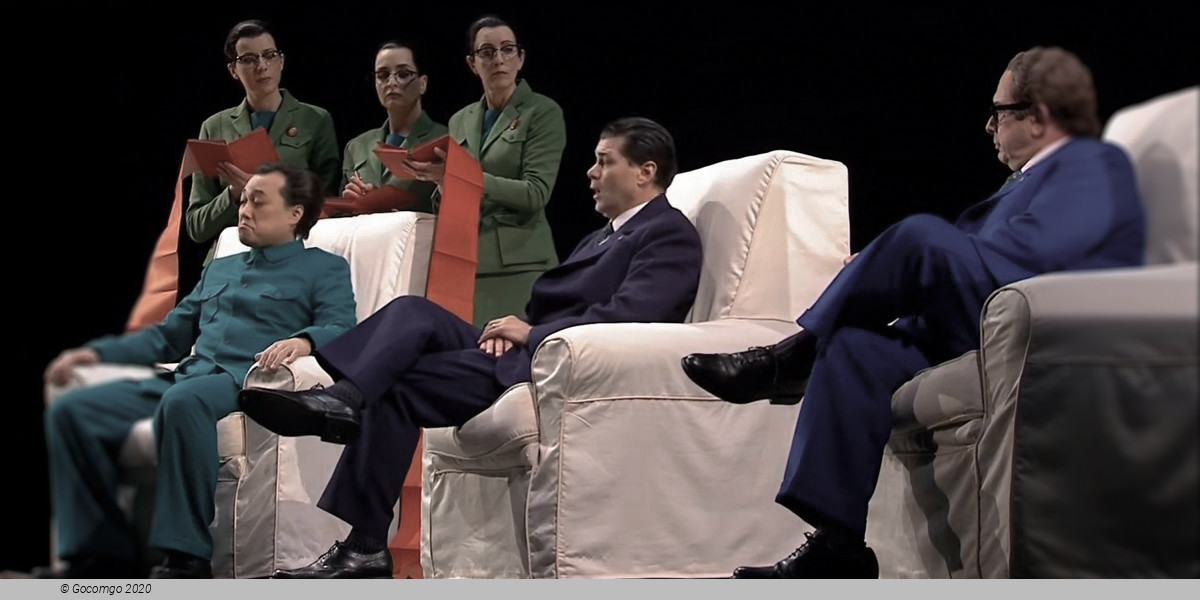
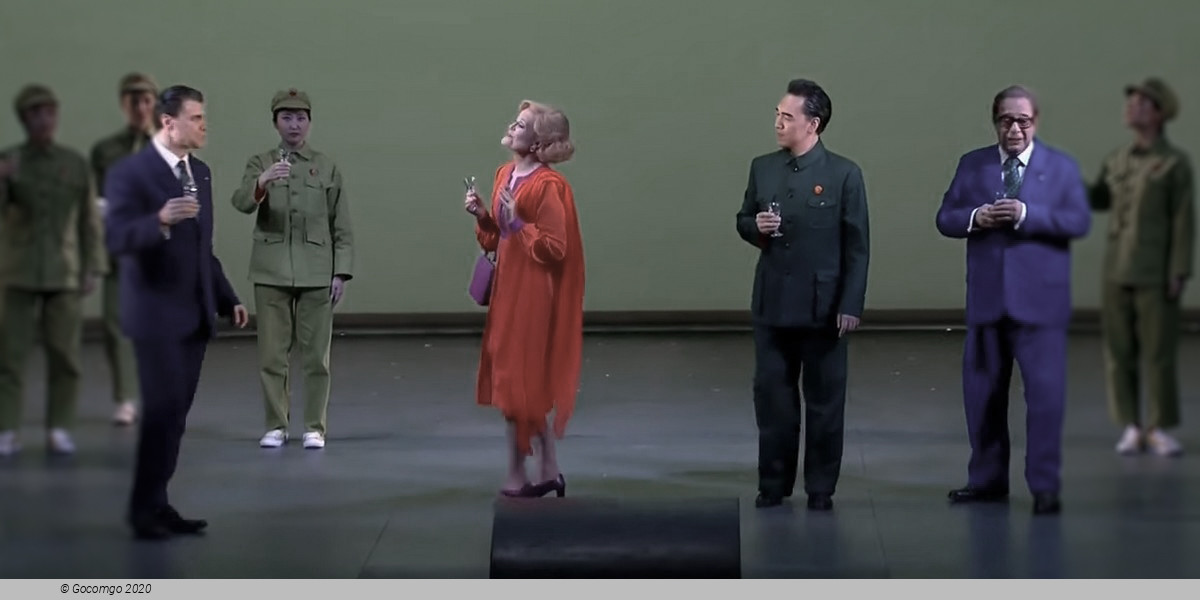
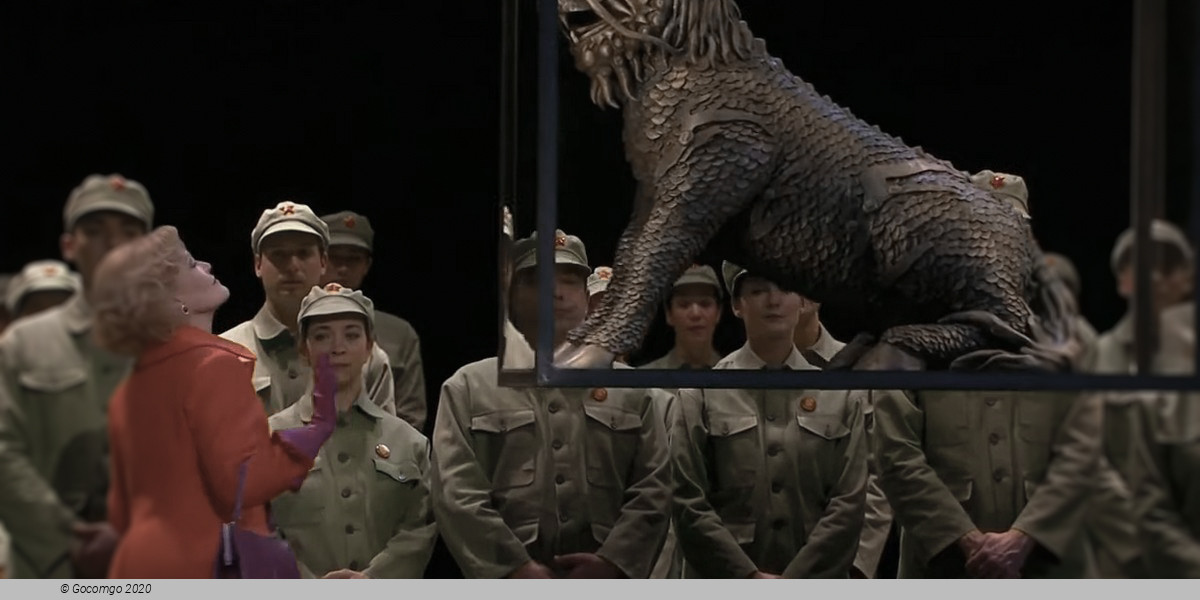
John Adams’s first opera turns forty and has become an established classic: the account of the historic visit of Richard and Pat Nixon to China, where they were received by Mao Tse-tung and his wife Chiang Ch’ing, presents in a single fresco both an episode of recent history – now once again strikingly relevant – and a glimpse into domestic life. Valentina Carrasco’s production, created in Paris, portrays with wit and elegance both the manoeuvres of what became known as “pingpong diplomacy” and the personalities of the protagonists, brought vividly to life by Thomas Hampson and Renée Fleming. For the occasion, Kent Nagano returns to the La Scala podium.

Teatro alla Scala New Production

Opéra de Paris Production

History
Premiere of this production: 22 October 1987, Wortham Theater Center, Houston

Nixon in China is an opera in three acts by John Adams with a libretto by Alice Goodman. Adams's first opera, it was inspired by U.S. president Richard Nixon's 1972 visit to the People's Republic of China.

Synopsis

Time: February 1972.
Place: In and around Peking.

Act 1

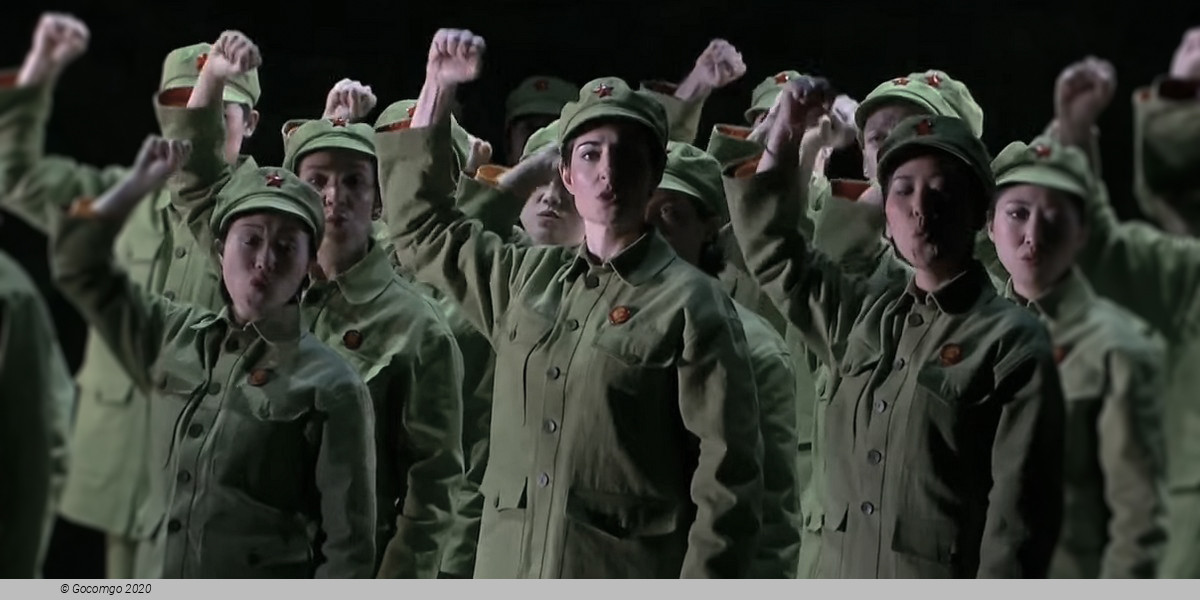
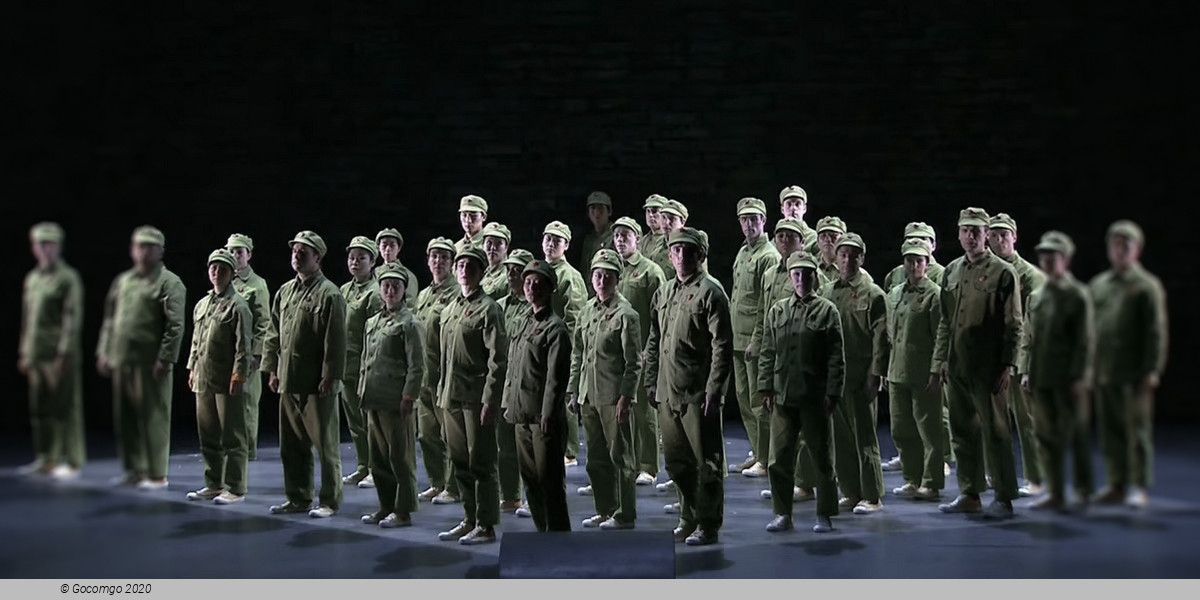
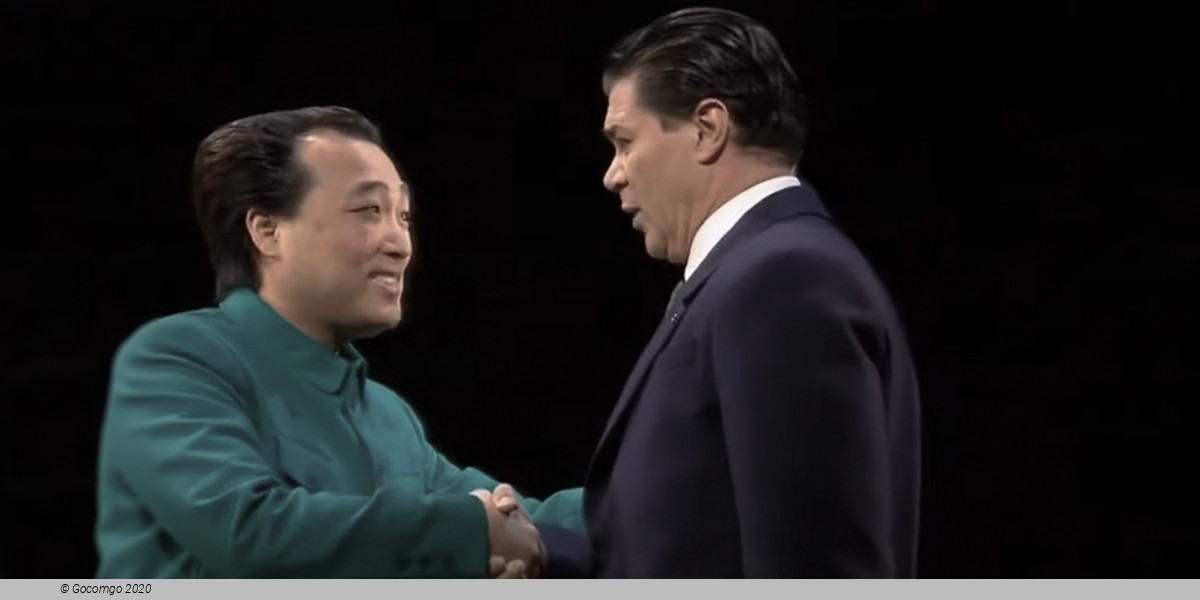
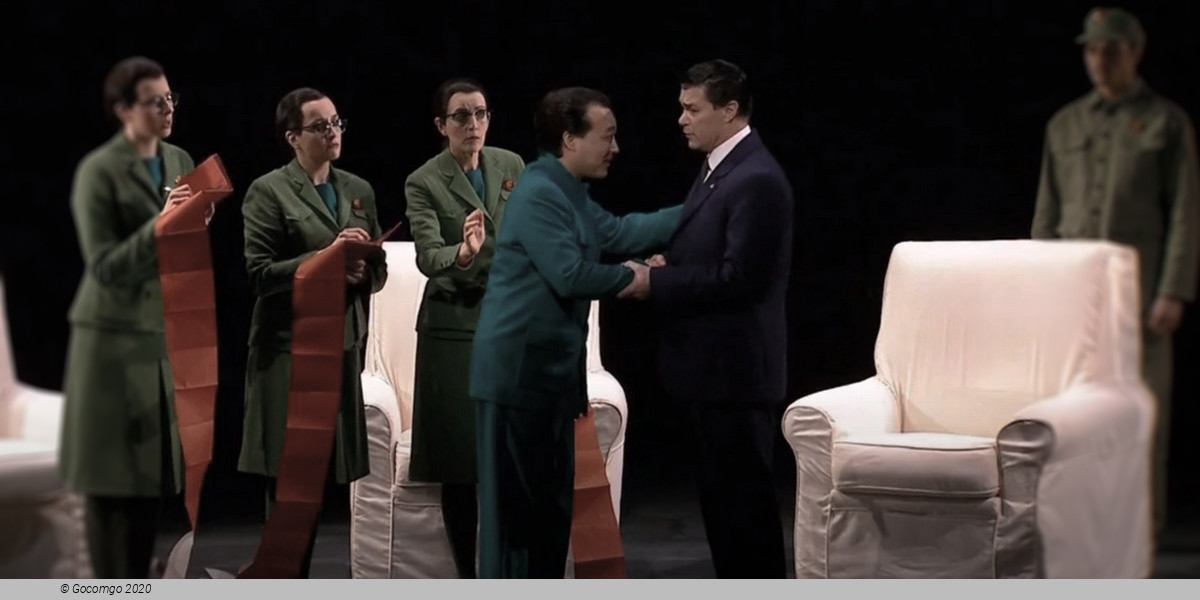
At Peking Airport, contingents of the Chinese military await the arrival of the American presidential aircraft "Spirit of '76", carrying Nixon and his party. The military chorus sings the Three Rules of Discipline and Eight Points for Attention. After the aircraft touches down, Nixon emerges with Pat Nixon and Henry Kissinger. The president exchanges stilted greetings with the Chinese premier, Chou En-lai, who heads the welcoming party. Nixon speaks of the historical significance of the visit, and of his hopes and fears for the encounter ("News has a kind of mystery"). The scene changes to Chairman Mao's study, where the Chairman awaits the arrival of the presidential party. Nixon and Kissinger enter with Chou, and Mao and the president converse in banalities as photographers record the scene. In the discussion that follows, the westerners are confused by Mao's gnomic and frequently impenetrable comments, which are amplified by his secretaries and often by Chou. The scene changes again, to the evening's banquet in the Great Hall of the People. Chou toasts the American visitors ("We have begun to celebrate the different ways") and Nixon responds ("I have attended many feasts"), after which the toasts continue as the atmosphere becomes increasingly convivial. Nixon, a politician who rose to prominence on anti-communism, announces: "Everyone, listen; just let me say one thing. I opposed China, I was wrong".

Act 2

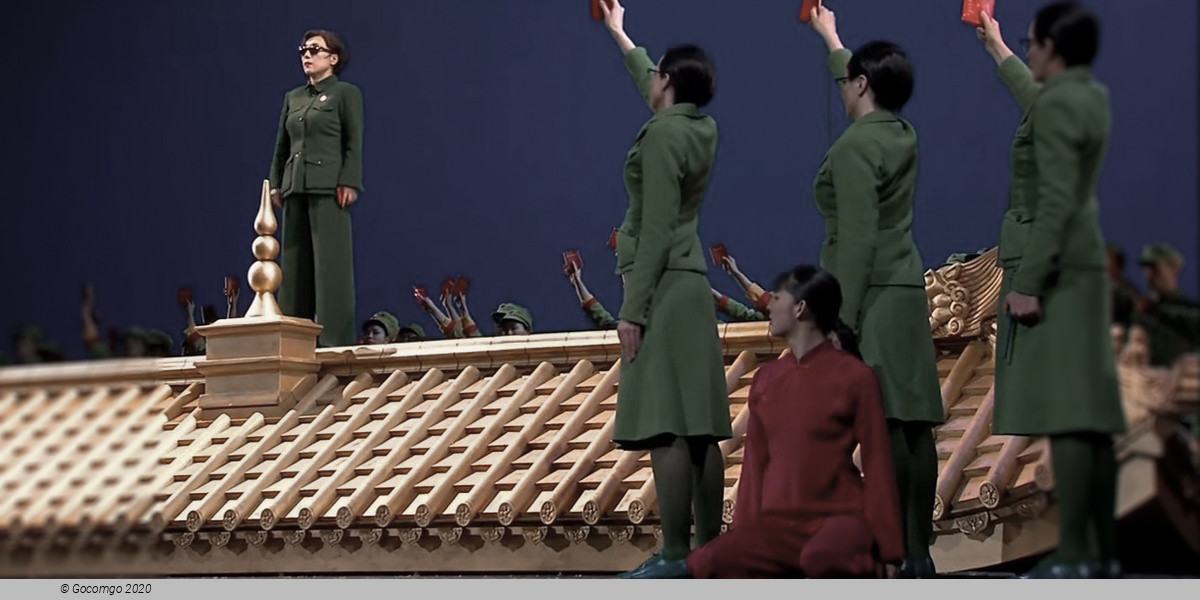
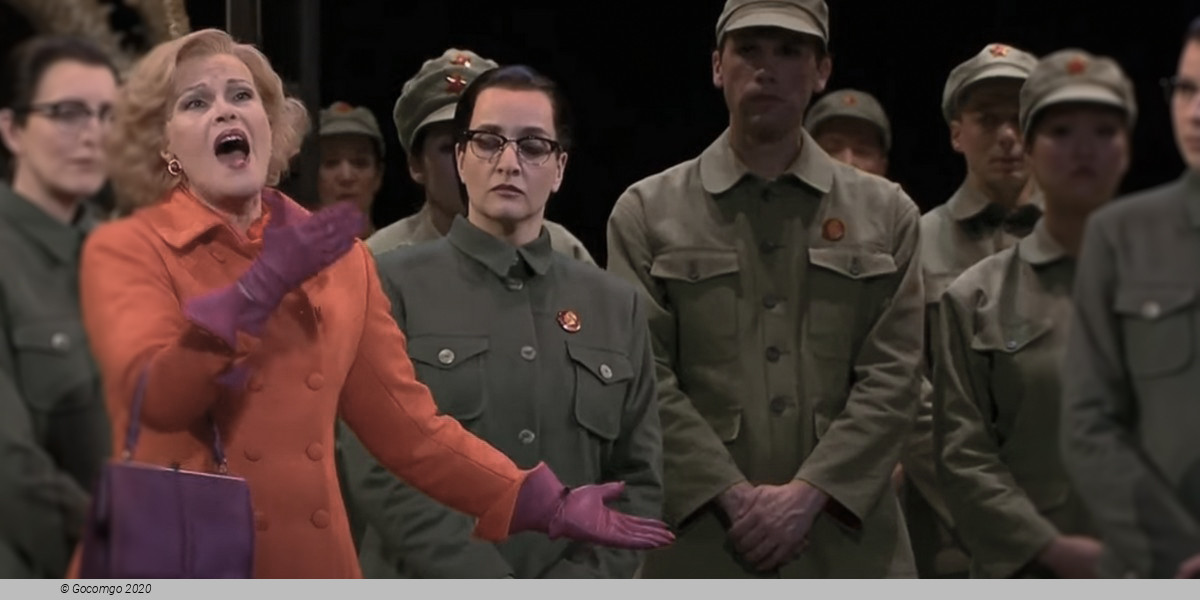
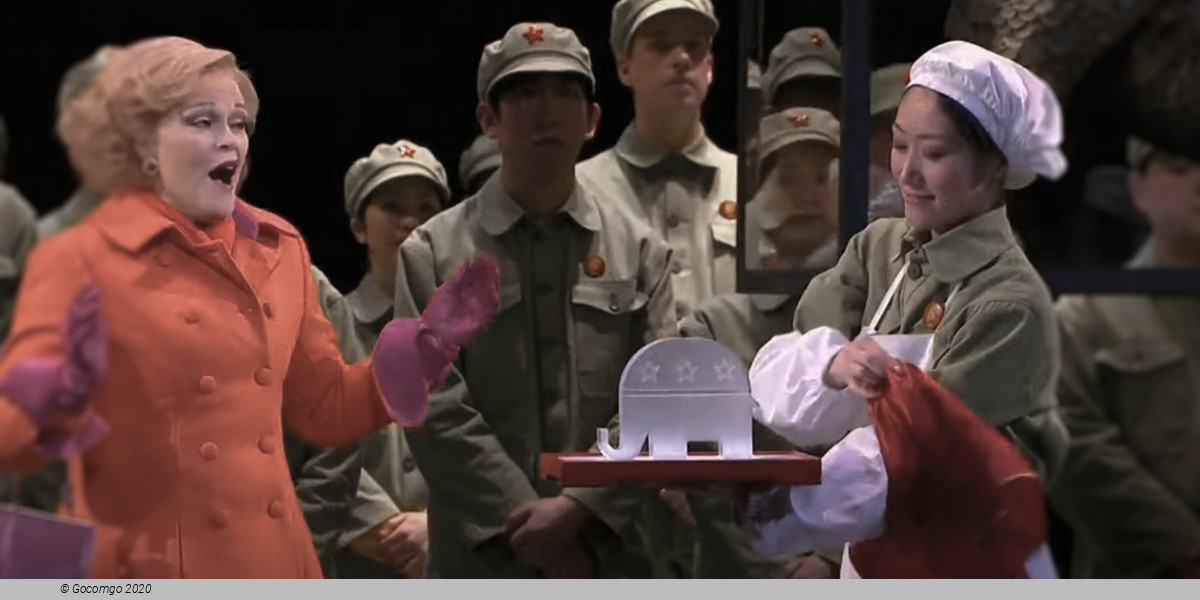
Pat Nixon is touring the city, with guides. Factory workers present her with a small model elephant which, she delightedly informs them, is the symbol of the Republican Party which her husband leads. She visits a commune where she is greeted enthusiastically, and is captivated by the children's games that she observes in the school. "I used to be a teacher many years ago", she sings, "and now I'm here to learn from you". She moves on to the Summer Palace, where in a contemplative aria ("This is prophetic") she envisages a peaceful future for the world. In the evening the presidential party, as guests of Mao's wife Chiang Ch'ing, attends the Peking Opera for a performance of a political ballet-opera The Red Detachment of Women. This depicts the downfall of a cruel and unscrupulous landlord's agent (played by an actor who strongly resembles Kissinger) at the hands of brave women revolutionary workers. The action deeply affects the Nixons; at one point Pat rushes onstage to help a peasant girl she thinks is being whipped to death. As the stage action ends, Chiang Ch'ing, angry at the apparent misinterpretation of the piece's message, sings a harsh aria ("I am the wife of Mao Tse-tung"), praising the Cultural Revolution and glorifying her own part in it. A revolutionary chorus echoes her words.

Act 3
On the last evening of the visit, as they lie in their respective beds, the chief protagonists muse on their personal histories in a surreal series of interwoven dialogues. Nixon and Pat recall the struggles of their youth; Nixon evokes wartime memories ("Sitting round the radio"). Mao and Chiang Ch'ing dance together, as the Chairman remembers "the tasty little starlet" who came to his headquarters in the early days of the revolution. As they reminisce, Chiang Ch'ing asserts that "the revolution must not end". Chou meditates alone; the opera finishes on a thoughtful note with his aria "I am old and I cannot sleep", asking: "How much of what we did was good?" The early morning birdcalls are summoning him to resume his work, while "outside this room the chill of grace lies heavy on the morning grass".

Venue Info

Teatro Alla Scala - Milan
Location   Via Filodrammatici, 2

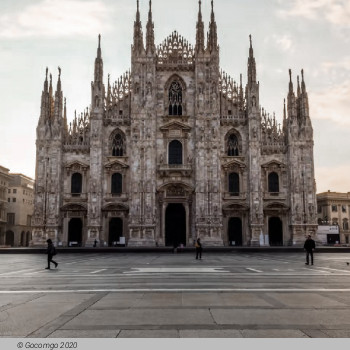
Teatro Alla Scala is an opera house in Milan. Most of Italy's greatest operatic artists, and many of the finest singers from around the world, have appeared at La Scala. The theatre is regarded as one of the leading opera and ballet theatres globally. It is home to the La Scala Theatre Chorus, La Scala Theatre Ballet, La Scala Theatre Orchestra, and the Filarmonica della Scala orchestra.

The Teatro alla Scala was founded, under the auspices of the Empress Maria Theresa of Austria, to replace the Royal Ducal Theatre, which was destroyed by fire on 26 February 1776 and had until then been the home of opera in Milan. The cost of building the new theatre was borne by the owners of the boxes at the Ducal, in exchange for possession of the land on which stood the church of Santa Maria alla Scala (hence the name) and for renewed ownership of their boxes. Designed by the great neoclassical architect Giuseppe Piermarini, La Scala opened on 3 August 1778 with Antonio Salieri's opera L'Europa riconosciuta, to a libretto by Mattia Verazi.

With the advent of Rossini in 1812 (La pietra del paragone), the Teatro alla Scala was to become the appointed place of Italian opera seria: of its history dating back more than a century and of its subsequent tradition up till the present. The catalogue of Rossini's works performed until 1825 included: Il turco in Italia, La Cenerentola, Il barbiere di Siviglia, La donna del lago, Otello, Tancredi, Semiramide and Mosé. During that period the choreographies of Salvatore Viganò (1769-181) and of Carlo Blasis (1795-1878) also widened the theatre's artistic supremacy to include ballet.

An exceptional new season of serious opera opened between 1822 and 1825, with Chiara e Serafina by Gaetano Donizetti (1797-1848) and Il pirata by Vincenzo Bellini (1801-1835). The later operas of Donizetti performed at La Scala were (until 1850) Anna Bolena, Lucrezia Borgia, Torquato Tasso, La fille du régiment, La favorita, Linda di Chamonix, Don Pasquale, and Poliuto. These were followed (until 1836) by Bellini's I Capuleti e i Montecchi, Norma, La sonnambula, Beatrice di Tenda and I puritani.

In 1839 Oberto Conte di San Bonifacio inaugurated the cycle of operas by Giuseppe Verdi (1813-1901), the composer whose name is linked more than any other to the history of La Scala. After the dismal failure of Un giorno di regno, Nabucco was performed in 1842. It was the first, decisive triumph of Verdi's career. At the same time, the strong patriotic feelings stirred by Nabucco founded the "popularity" of opera seria and identified its image with the Scala.

Arturo Toscanini (1867-1957) became the artistic director and introduced radical reform into the theatre, both in its organisational aspects and in its relations with the public. Toscanini, one of the greatest conductors of all time, took up Verdi's musical inheritance and launched a tradition of interpretation that continued uninterruptedly and was renewed during the twentieth century. It was he who reappraised and regularly performed at the Scala the works of Richard Wagner (hitherto only belatedly and inadequately recognised). He also firmly extended the Scala's orchestral repertoire to include symphonic music.

In 1948 maestro Guido Cantelli (1920-1956) made his debut and established himself as one of the leading postwar conductors. Numerous opera performances productions (the Wagnerian cycle conducted in 1950 by Wilhelm Furtwängler, the Verdi repertoire by Victor De Sabata, etc), concerts (Herbert von Karajan, Dimitri Mitropoulos, Bruno Walter, etc), singers (Maria Callas, Renata Tebaldi, Giuseppe Di Stefano, Mario Del Monaco, etc), ballet performances (Margot Fonteyn, Serge Lifar, Maya Plissetskaya, Rudolf Nureyev), and productions (Luchino Visconti, Giorgio Strehler) belong not only to the history of the Scala, but to that of the history of musical theatre since the war.

In 1965 Claudio Abbado made his début at the Scala and in 1972 was named conductor of the Scala Orchestra. Until 1986 he directed among other works Il barbiere di Siviglia, Cenerentola, L'Italiana in Algeri by Rossini, Simon Boccanegra, Macbeth and Don Carlo by Verdi, the recent Al gran sole carico d'amore by Luigi Nono, and Pelléas et Mélisande by Claude Debussy. He also conducted numerous concerts. The chorus-master was Romano Gandolfi. In 1975 the ballet dancer Oriella Dorella debuted at La Scala. Among other contemporary composers, up till 1986 the Theatre continued to give works by Luciano Berio (La vera storia), Franco Donatoni (Atem) and Karlheinz Stockhausen (Samstag aus Licht).

In 1981 Riccardo Muti debuted at the Scala as an opera conductor (Mozart, Le nozze di Figaro). Giulio Bertola was appointed to direct the Chorus. In 1982 the Orchestra Filarmonica della Scala was established. In 1985 Alessandra Ferri made her debut at the Scala. In 1986 Riccardo Muti was appointed musical director. From 1989 to 1998 he reintroduced the best-loved works (Rigoletto, La traviata, Macbeth, La forza del destino) and numerous other titles by Verdi including Falstaff and Don Carlo.

In 1991 Roberto Gabbiani took over the directorship of the chorus. In 1997 La Scala was converted into a Foundation under private ownership, thus opening a decisive phase of modernisation.

On 7 December 2001 a new production of Otello, conducted by Muti, concluded the Verdi Year and, for the time being, performances at Piermarini’s original building in Piazza Scala. Major restoration and modernisation works of the Theatre began in January 2002.

The 2005-2006 Season, dedicated to the 250th anniversary of Mozart’s birth, was inaugurated by Idomeneo conducted by Daniel Harding. The 2006/07 season saw the return on 7 December of an opera by Verdi, Aida, conducted by Riccardo Chailly, and the launch of the Celebrations for the 50th Anniversary of Arturo Toscanini’s Death. On 7 December 2007 the 2007/08 season opened with Tristan und Isolde conducted by Daniel Barenboim. The opera marked the beginning of a closer collaboration between the Teatro alla Scala and the Israeli-Argentinian Maestro.

Important Info
Type: Opera
City: Milan, Italy
Starts at: 20:00
Acts: 3
Top of page