
Théâtre de l'Athénée 5 June 2021 - The Seven Deadly Sins | GoComGo.com

The Seven Deadly Sins

Théâtre de l'Athénée, Large Hall, Paris, France
All photos (4)
Select date and time
7 PM
Request for Tickets
Important Info
Type: Ballet
City: Paris, France
Starts at: 19:00
Duration: 1h
Sung in: German
Titles in: French

E-tickets: Print at home or at the box office of the event if so specified. You will find more information in your booking confirmation email.

You can only select the category, and not the exact seats.
If you order 2 or 3 tickets: your seats will be next to each other.
If you order 4 or more tickets: your seats will be next to each other, or, if this is not possible, we will provide a combination of groups of seats (at least in pairs, for example 2+2 or 2+3).

Overview

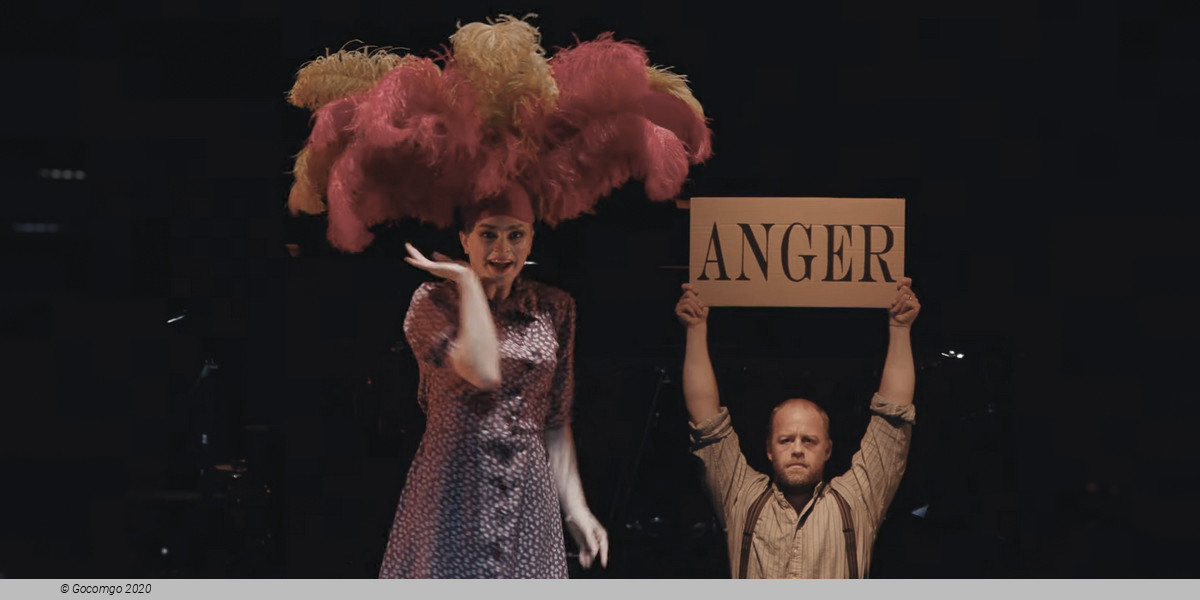
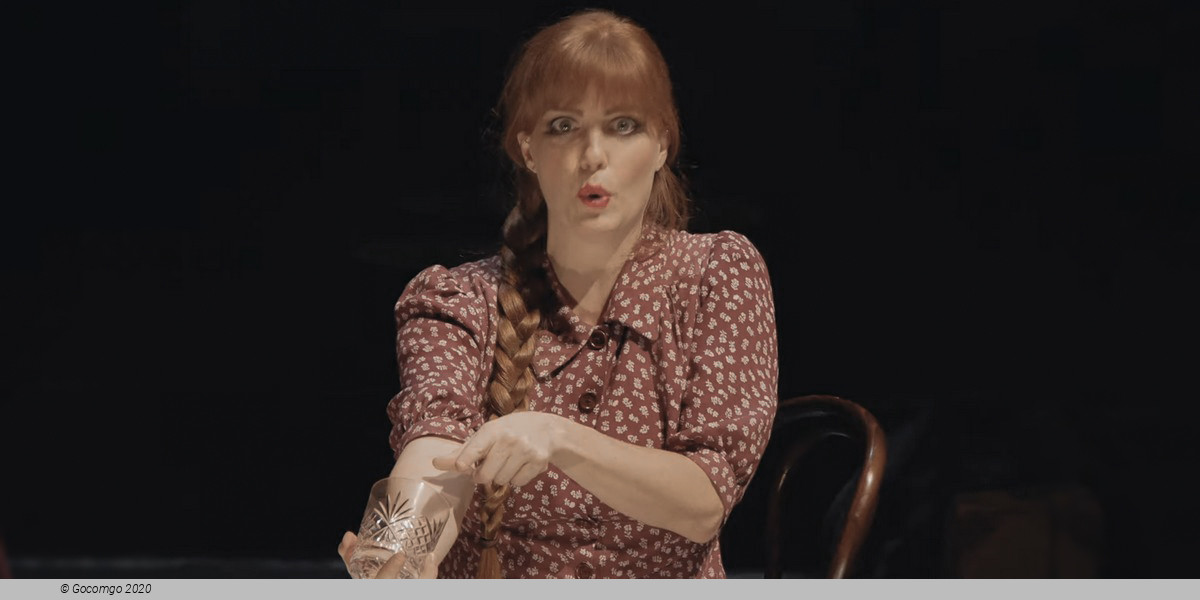
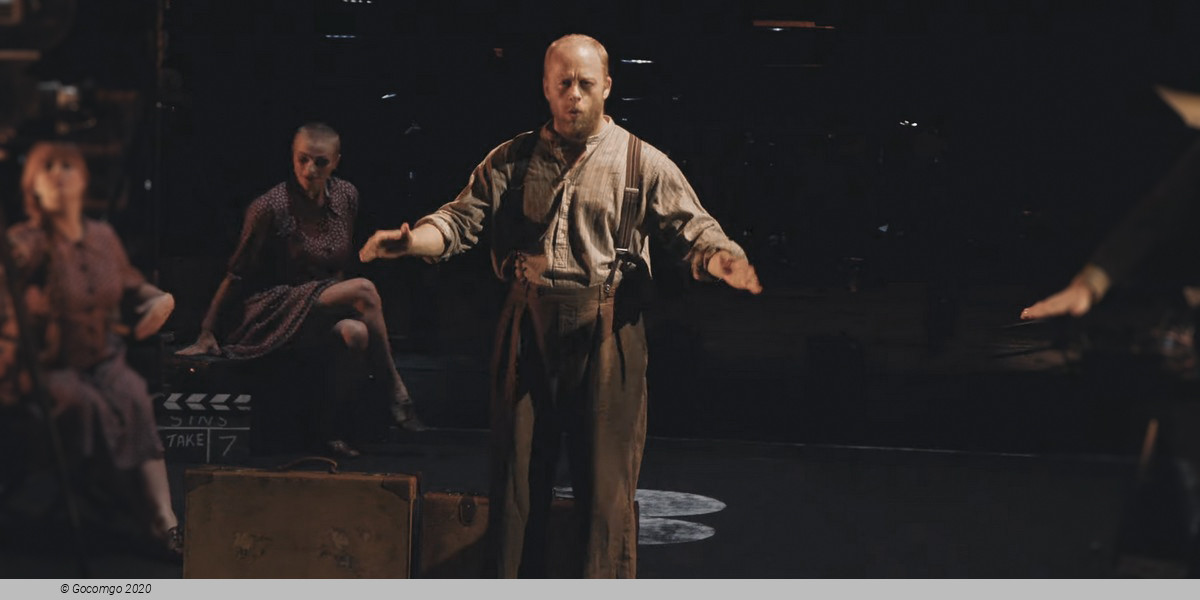
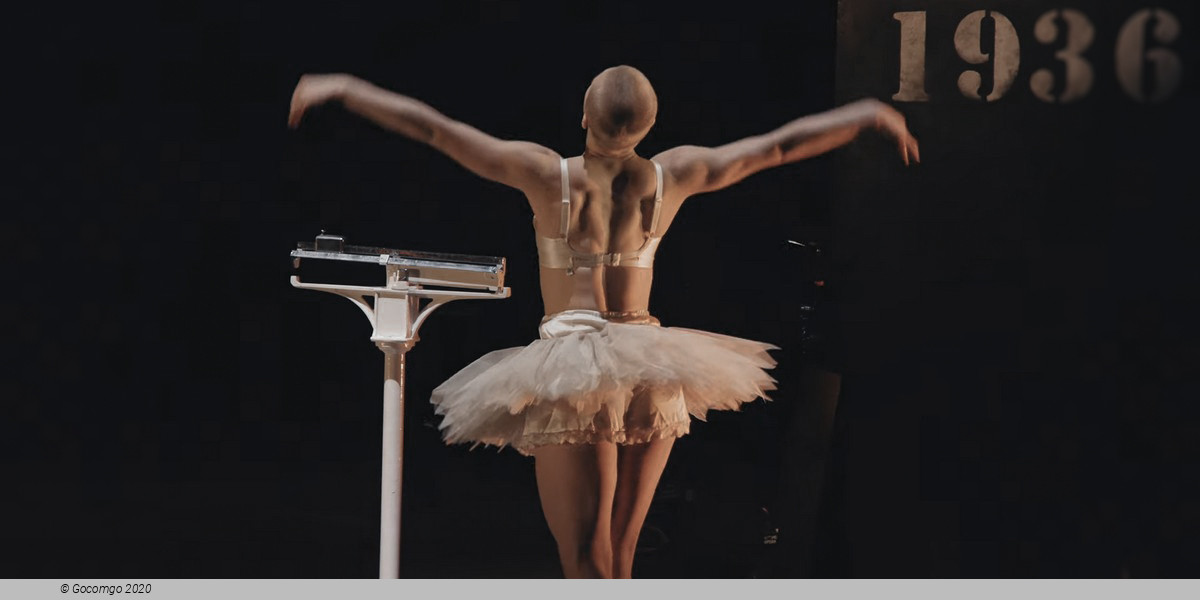
On the eternal plot of the innocent young girl that society will corrupt, Brecht and Kurt Weill proposed in 1933 a variation as new as it creaking that would become a classic. Here is the heroine who became two sisters… “Pushed by Anna 1, Anna 2 avoids each of the sins to commit others much more monstrous with the blessing of all”, summarizes the director Jacques Osinski. It is to the young mezzo-soprano Natalie Pérez that he entrusted this double role, in a road trip in Mississippi which is also the story of “the dream and the compromises to which we give in to reach it”, and which today nothing of its insolence and its bite has been lost.

History
Premiere of this production: 07 June 1933, Théâtre des Champs-Élysées, Paris

The Seven Deadly Sins is a satirical ballet chanté ("sung ballet") in seven scenes (nine movements, including a Prologue and Epilogue) composed by Kurt Weill to a German libretto by Bertolt Brecht in 1933 under a commission from Boris Kochno and Edward James. It was translated into English by W. H. Auden and Chester Kallman. It was the last major collaboration between Weill and Brecht.

Synopsis

The Seven Deadly Sins tells the story of two sisters, Anna I and Anna II. Anna I, the singer, is the principal vocal role. Anna II, the dancer, is heard only infrequently and the text hints at the possibility that the two Annas are the same person: "To convey the ambivalence inherent in the 'sinner', Brecht splits the personality of Anna into Anna I, the cynical impresario with a practical sense and conscience, and Anna II, the emotional, impulsive, artistic beauty, the salable product with an all too human heart." Anna I sings:

She's the one with the looks. I'm realistic. She's just a little mad, my head is on straight. But we're really one divided being, even though you see two of us. And both of us are Anna. Together we've but a single past, a single future, one heart, and one saving account and we only do what suits each other best. Right, Anna?

"The Family", a male quartet, fills the role of a Greek chorus. They refer to Anna as a single daughter of the family, making a verbal allusion to her divided nature: "Will our Anna pull herself together?" The sisters set out from the banks of the Mississippi River in Louisiana to find their fortune in the big cities, intending to send their family enough money to build a little house on the river. After the prologue, in which Anna I introduces the sisters and their plans, each of seven scenes is devoted to one of the seven deadly sins, each encountered in a different American city:

Prologue
Faulheit / Sloth (city unnamed)
Stolz / Pride (Memphis)
Zorn / Wrath (Los Angeles)
Völlerei / Gluttony (Philadelphia)
Unzucht / Lust (Boston)
Habsucht / Greed (Tennessee, in posthumous versions Baltimore)
Neid / Envy (San Francisco)
Epilogue (home, in the new little house)

While securing the means to build the little house over the course of seven years, Anna II envies those who can engage in the sins she must abjure. The epilogue ends on a sober note, as Anna II's responds with resignation to her sister: "Yes, Anna."

Venue Info

Théâtre de l'Athénée - Paris
Location   7 Rue Boudreau

The Théâtre de l'Athénée is a theatre at 7 rue Boudreau, in the 9th arrondissement of Paris. Renovated in 1996 and classified a historical monument, the Athénée inherits an artistic tradition marked by the figure of Louis Jouvet who directed the theatre from 1934 to 1951. During the period when he was director, it became known as the Athenée Théâtre Louis-Jouvet.

The current Théâtre de l'Athénée was constructed from a foyer (part of the former Éden-Théâtre), which was converted into an intimate theatre in 1893 by the architect Stanislas Loison with further modifications carried out by the architect Paul Fouquiau in 1894. It opened on 31 December 1894 under the name Théâtre de la Comédie-Parisienne.

Oscar Wilde's play Salomé (originally written in French) was premiered there on 11 February 1896 in a staging by Lugné-Poe's theatre group, the Théâtre de l'Œuvre. The location had become rather unsafe, as demolition work on the Éden-Théâtre was in progress all around it. The police considered banning the performances due to the risk of fire or accident. Their concerns were somewhat reduced by the construction of a temporary 12-meter-long passageway from the theatre to the rue Boudreau.

Later that year the construction work on the site of the former Éden theatre was finally completed by Fouquiau, and the theatre was reconstituted as the Athénée-Comique, "from the name of a notoriously frivolous, perhaps immoral, establishment nearby that had to close ten years earlier". The theatre was renamed Athénée in 1899. For the first 40 years, it was the home of vaudevilles, comedies, and melodramas.

In 1934 Louis Jouvet took control of the theatre and made it famous. He continued to produce and perform there (not exclusively, however), until his death in 1951. Among the premieres under Jouvet were several plays by Jean Giraudoux, including Tessa (14 November 1934), La guerre de Troie n'aura pas lieu (The Trojan War Will Not Take Place; 21 November 1935), Supplément au voyage de Cook (The Virtuous Island; 21 November 1935), Electre (13 May 1937), L'impromptu de Paris (3 December 1937), Ondine (3 May 1939), and La folle de Chaillot (The Madwoman of Chaillot; 22 December 1945), as well as Marcel Achard's Le corsaire (25 March 1938) and Jean Genet's Les bonnes (The Maids; 19 April 1947). One of Jouvet's most successful revivals was Molière's L'école des femmes (The School for Wives; 9 May 1936; 446 performances, plus another 229 on tour), in which Jouvet performed the role of Arnolphe.

Pierre Renoir, who had been an actor in Jouvet's troupe, was artistic director, briefly, from 1951 until his death the following year.

In the 2000s the Théâtre Athénée presented revivals of operetta and musical comedy, among which the Brigands company produced Le docteur Ox (2003), Ta Bouche (2004), Toi c'est moi (2005) and Arsène Lupin Banquier (2007).

Important Info
Type: Ballet
City: Paris, France
Starts at: 19:00
Duration: 1h
Sung in: German
Titles in: French
Top of page