Théâtre des Champs-Elysées 1 June 2022 - Hulda (concert version) | GoComGo.com

Hulda (concert version)

Théâtre des Champs-Elysées, Paris, France
All photos (1)
Select date and time
7:30 PM
Request for Tickets
Important Info
Type: Opera
City: Paris, France
Starts at: 19:30
Sung in: French
Titles in: French,English

E-tickets: Print at home or at the box office of the event if so specified. You will find more information in your booking confirmation email.

You can only select the category, and not the exact seats.
If you order 2 or 3 tickets: your seats will be next to each other.
If you order 4 or more tickets: your seats will be next to each other, or, if this is not possible, we will provide a combination of groups of seats (at least in pairs, for example 2+2 or 2+3).

Overview

In this rare Hulda, the musician rediscovers all the lyricism so characteristic of his symphonic and chamber works.

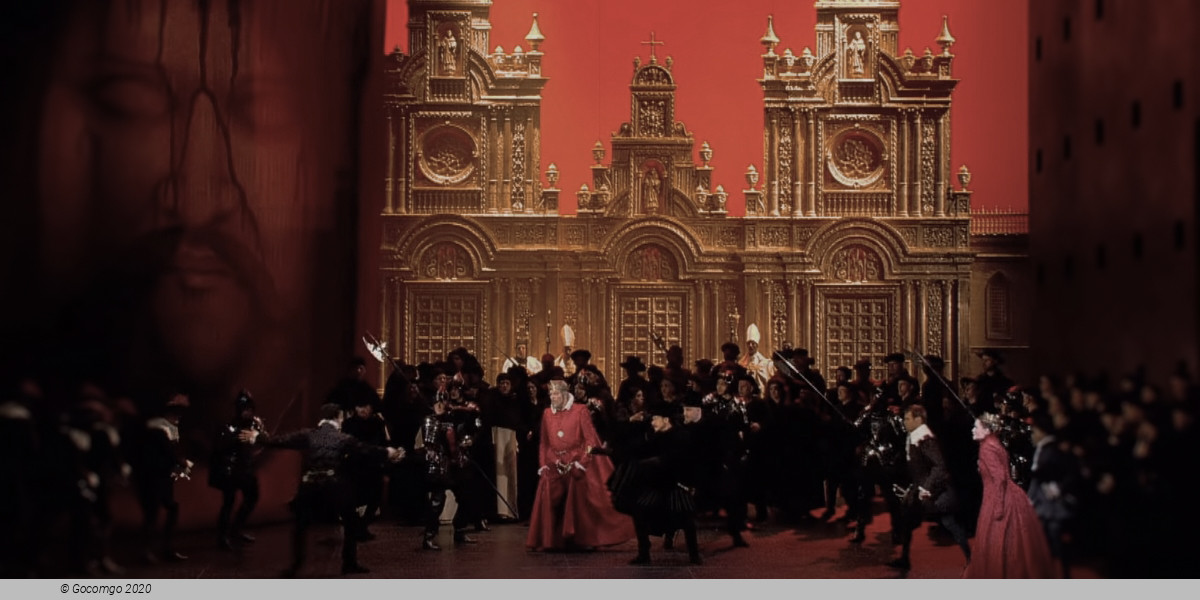
Hulda, composed between 1879 and 1885, was never performed during César Franck's lifetime and took more than a century to be premiered in its entirety (London, 1994). Inspired by a Norwegian play, this medieval legend closely follows Wagner's imagination without turning its back on French grand opera. Premiered in Monte Carlo in 1894 in an abridged version and minimalist staging, the work was then cleverly "buried" by Franck's students. Preferring to keep the image of a composer of pure music, they reserved for themselves the glory of embodying the Wagnerian legacy on stage. If these issues are now obsolete, we are left with Hulda, "a high-flying score, brimming with invention, with a gripping evocative force and a lyrical quality of the highest order" according to Joël-Marie Fauquet, the composer's biographer.

COPRODUCTION Palazzetto Bru Zane | Théâtre des Champs-Elysées | Orchestre Philharmonique Royal de Liège / Centre d’Art Vocal et de Musique Ancienne
Dans le cadre du bicentenaire César Franck (1822-2022) de l’Orchestre Philharmonique Royal de Liège et du 9e Festival Palazzetto Bru Zane Paris

History
Premiere of this production: 16 October 1894, Monte Carlo

Hulda is an opera by César Franck to a French libretto by Charles Grandmougin. It is set in 11th-century Norway, and is based on the play Lame Hulda (1858) by Norwegian writer Bjørnstjerne Bjørnson. The complete opera contains a prologue, three acts and an epilogue. It was composed between 1879 and 1885.

Synopsis

The story tells how Hulda seeks revenge on Aslak and his clan, who killed her family. The subject depicts a young woman as a victim, her faith in nature, her destiny, and women's suffering at the hands of men.

Prologue
After a prelude depicting the wind and sea, Hulda and her mother, singing a prayer duet, await the return of their menfolk from hunting. After an off-stage chorus of fishermen (accompanied by four saxophones), the Aslak men celebrate their murder of the Hustawicks, and Gudleik declares his lust for in Hulda, who responds with a curse (an oath motif), and vows revenge on his family. A chorus of victory for the Aslaks contains a three chord death motif which will recur when they themselves meet their deaths.

Act 1
Two years on, Hulda is to be married to Gudleik, and Gunnard is to marry Thordis. After a haunting A minor women's chorus and the brighter entrance of Swanhilde, Gudleik and his brothers are heard arguing over Hulda, until Gudrun forces them – in an aria with typically Franckian chromatic harmonies – to show more respect. Hulda has seen Eiolf, an emissary of the Norwegian king (who has rejected Swanhilde) and is infatuated by him. The wedding party assembles but soon Eiolf arrives and during a traditional show of manliness and courage by the men, Eiolf and Gudleik fight, resulting in the death of Gudleik in a Verdian-style finale.

Act 2
After a pastoral prelude, Aslak and Gudrun are seen grieving for Gudleik. At evening time Hulda in a wide-ranging soliloquy, awaits Eiolf, who she sees as a god-sent avenger who has released her from the Aslaks and the duty of her vengeance. After a passionate duet in which Hulda makes Eiolf promise to return with her to her homeland, he leaves her for the night and Arne, one of Aslak's sons enters and declares his love for Hulda. Old Aslak sees a man making love to Hulda, and kills him – only discovering after that he has killed his own son, and Hulda's curse has claimed a second victim.

Act 3
After the long Arctic winter, celebrations and selection of a May queen are set to a waltz-like movement. Swanhilde is still upset by her betrayal by Eiolf, but her friend Thordis promises to re-unite them. When Eiolf enters Swanhilde is cold and cannot conceal her jealousy of Hulda; Eiolf embraces her. Hulda, close at hand, sees his betrayal of her, and she gets the remaining Aslak brothers to help murder Eiolf. They agree to meet the following day. The celebrations of spring resume, in contrast to Hulda's despair.

Epilogue
After an entr'acte based on the stark music from the beginning of the opera, there follows an evening chorus. The passion of Swanhilde and Eiolf's reconciliation contrasts sharply with Hulda's pain. She prepares for revenge: the Aslaks return and Eiolf is struck down. When the brothers then turn on her, she welcomes death and when the men turn away in fear, Hulda throws herself in the fjord.


Venue Info

Théâtre des Champs-Elysées - Paris
Location   15 Avenue Montaigne

The Théâtre des Champs-Élysées is an entertainment venue situated near Avenue des Champs-Élysées, from which it takes its name. Its eponymous main hall may seat up to 1,905 people.

Commissioned by impresario Gabriel Astruc, the theatre was built from 1911 to 1913 upon the designs of brothers Auguste Perret and Gustave Perret following a scheme by Henry van de Velde, and became the first example of Art Deco architecture in the city. Less than two months after its inauguration, the Théâtre hosted the world premiere of the Ballets Russes' Rite of Spring, which provoked one of the most famous classical music riots.

At present, the theatre shows about three staged opera productions a year, mostly baroque or chamber works more suited to the modest size of its stage and orchestra pit. It also houses an important concert season. It is the home venue of the Orchestre National de France and the Orchestre Lamoureux and serves as a French base for the Vienna Philharmonic Orchestra as well.

The Orchestre Philharmonique de Radio France, the Orchestre des Champs-Élysées and Ensemble orchestral de Paris play most of their concerts here too, along with other dance, chamber music, recital, and pop events.

Important Info
Type: Opera
City: Paris, France
Starts at: 19:30
Sung in: French
Titles in: French,English
Top of page