Scene: Tauris (modern day Crimea), in legendary antiquity
Years before the action of the opera, the young princess Ifigenia narrowly escaped death by sacrifice at the hands of her father, Agamemnon. At the last moment the goddess Diana, to whom the sacrifice was to be made, intervened and replaced Ifigenia on the altar with a deer, saving the girl and sweeping her off to Tauris. She has since been made a priestess at the temple of Diana in Tauris, a position in which she has the gruesome task of ritually sacrificing foreigners who land on King Toante's shores. Ifigenia hates her forced religious servitude and has had a prophetic dream about her younger brother Oreste and believes that he is dead. Meanwhile, Oreste has killed his mother Clytemnestra to avenge his father Agamemnon with assistance from his friend Pilade. He becomes haunted by the furies for committing the crime and goes through periodic fits of madness.
To this mythological material adapted from Euripides' Iphigenia in Tauris, Oreste adds the character of Oreste's wife Hermione, searching for him to aid him in his quest for restoration of his mind and peace of spirit, and also adds another character, Filotete, not present in the Euripides play.
Act 1
Sacred Grove of Diana with a statue of the goddess - Oreste is tormented both by personal remorse for the killing of his mother and by the furies. Wandering the world in a restless search for relief, he has been shipwrecked on the coast of Tauris. He prays to the goddess for peace and forgiveness (Aria:Pensieri, voi mi tormentate). Ifigenia enters with a retinue of priests and does not recognise the stranger as her brother, whom she has not seen since childhood and she believes to be dead (Aria:Bella calma). It is Ifigenia's duty to sacrifice strangers who appear in the kingdom to Diana, but she does not want to do this and advises the stranger to take refuge in the temple of Diana, to which he agrees (Aria:Agitato da fiere tempeste).Filotete,captain of King Toante's guard, who is in love with Ifigenia and she with him, arrives and promises to help her to try to save the young stranger from death, for which Ifigenia is grateful (Aria: Dirti vorrei). Left alone, Filotete is happy that Ifigenia trusts him to help her and looks forward to her love as his reward (Aria:Orgogliosetto va l'augelletto).
A seaport with ships at anchor - Ermione has arrived in Tauris, in search of her husband Oreste (Aria:Io sperai di veder il tuo volto). She is met by Pilade, faithful friend of Oreste, but they are both arrested by Filotete as foreigners. King Toante decrees that according to law both Ermione and Pilade must be put to death as human sacrifices to the goddess Diana, but changes his mind, and orders that Pilade only will be killed. Left alone with Ermione, he tells her he has fallen in love with her and will save her life if she will be his. She refuses this offer, whereupon he warns her to beware his wrath (Aria:Pensa ch'io sono). Left alone, Ermione laments her fate (Aria: Dite pace e fulminate). The act concludes with a set of dances for the Grecian sailors.
Act 2
The forecourt of the temple of Diana - The act begins with an introductory sinfonia. Oreste is in the temple where he has taken refuge at Ifigenia's advice when he sees his friend Pilade in chains, dragged in ready to be sacrificed to the goddess. Oreste swears he will fight to save his beloved friend (Aria:Empio, se mi dai vita). Ifigenia intervenes however, and capitalising on Filotete's love for her, persuades him to allow Oreste to leave the temple freely (Aria:Se'l caro figlio). Oreste is reluctant to leave Pilade in danger but Pilade insists Oreste save himself (Aria:Caro amico, a morte io vo),and is then led away. In an accompanied recitative and aria, Oreste rails against the gods for their cruelty (Aria:Un interrotto affetto).
Royal garden with a gate that leads to the sea - Ifigenia shows Oreste the way to the sea and urges him to flee (Aria:Sento nell'alma). Alone, Oreste expresses his thanks to the gods for sending him the "noble virgin" who has rescued him but feels guilty for leaving his friend Pilade in danger of death (Aria:Dopo l'orrore). Ermione has traced Oreste's steps and is overjoyed to have found her husband (Aria:Vola l'augello). King Toante enters to see them embracing and orders them both to be executed. Oreste and Ermione take a loving farewell of each other (Duet:Ah, mia cara). A set of dances concludes the act.
Act 3
The King's chamber - Toante offers to Ermione that he will free both her and Oreste if she will be his (Aria:Tu di pieta mi spogli.) She scorns this offer, preferring chains and death, and, left alone, laments her cruel destiny (Aria: Piango dolente il sposo).
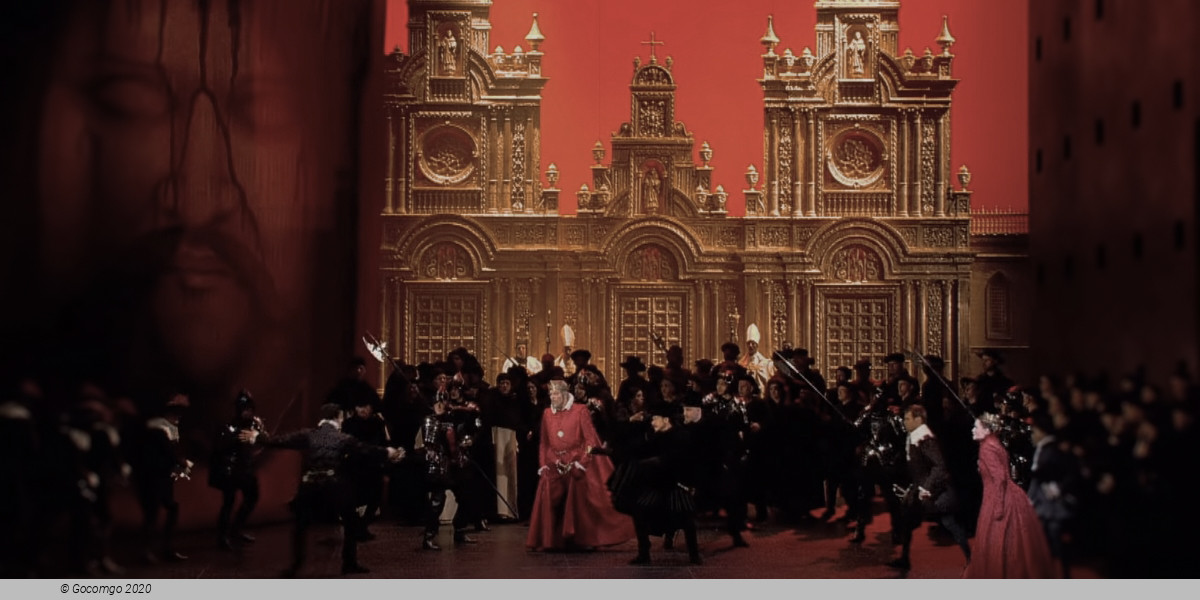
The temple of Diana with an altar and statue - Ifigenia, whose duty it will be to ritually sacrifice the human victims, wishes she could die instead (Aria:Mi lagnerò, tacendo). Oreste is led in to be sacrificed and Ifigenia now recognises him as her brother. Ermione and then the King arrive and she begs him for mercy, as does Pilade who offers to die in Oreste's place. Toante refuses these pleas, even when Ifigenia reveals that Oreste is her brother. The King commands her to slay both Oreste and Pilade, but Ifigenia threatens to kill him instead. She is supported in this by Filotete. Combat ensues; the King is killed. Human sacrifice will now be ended, brother and sister, husband and wife can be re-united. Oreste expresses his joy (Aria: In mille dolci modi). A suite of dances follows, then a concluding chorus as all celebrate the fortunate outcome of events.





 15 Avenue Montaigne