
Abay Kazakh State Opera and Ballet Theatre tickets 13 March 2026 - Evening of one-act ballet «Chopiniana», «Rediscovering Bach», «Bolero» | GoComGo.com

Evening of one-act ballet «Chopiniana», «Rediscovering Bach», «Bolero»

Abay Kazakh State Opera and Ballet Theatre, Main Stage, Almaty, Kazakhstan
All photos (14)
Select date and time
7 PM
From
US$ 30

E-tickets: Print at home or at the box office of the event if so specified. You will find more information in your booking confirmation email.

You can only select the category, and not the exact seats.
If you order 2 or 3 tickets: your seats will be next to each other.
If you order 4 or more tickets: your seats will be next to each other, or, if this is not possible, we will provide a combination of groups of seats (at least in pairs, for example 2+2 or 2+3).

Important Info
Type: Ballet
City: Almaty, Kazakhstan
Starts at: 19:00
Acts: 1

E-tickets: Print at home or at the box office of the event if so specified. You will find more information in your booking confirmation email.

You can only select the category, and not the exact seats.
If you order 2 or 3 tickets: your seats will be next to each other.
If you order 4 or more tickets: your seats will be next to each other, or, if this is not possible, we will provide a combination of groups of seats (at least in pairs, for example 2+2 or 2+3).

Cast
Performers
Conductor: Kuanysh Ismailov
Ballet company: Ballet of the Abay Kazakh National Opera and Ballet Theater
Orchestra: The Symphony Orchestra of the Kazakh National Opera and Ballet Theatre
Creators
Composer: Alexander Glazunov
Composer: Frédéric Chopin
Composer: Johann Sebastian Bach
Composer: Maurice Ravel
Choreographer: David Jonathan
Choreographer: Maurice Béjart
Choreographer: Michel Fokine
Choreography: Agrippina Vaganova
Sets: Orest Allegri
Overview

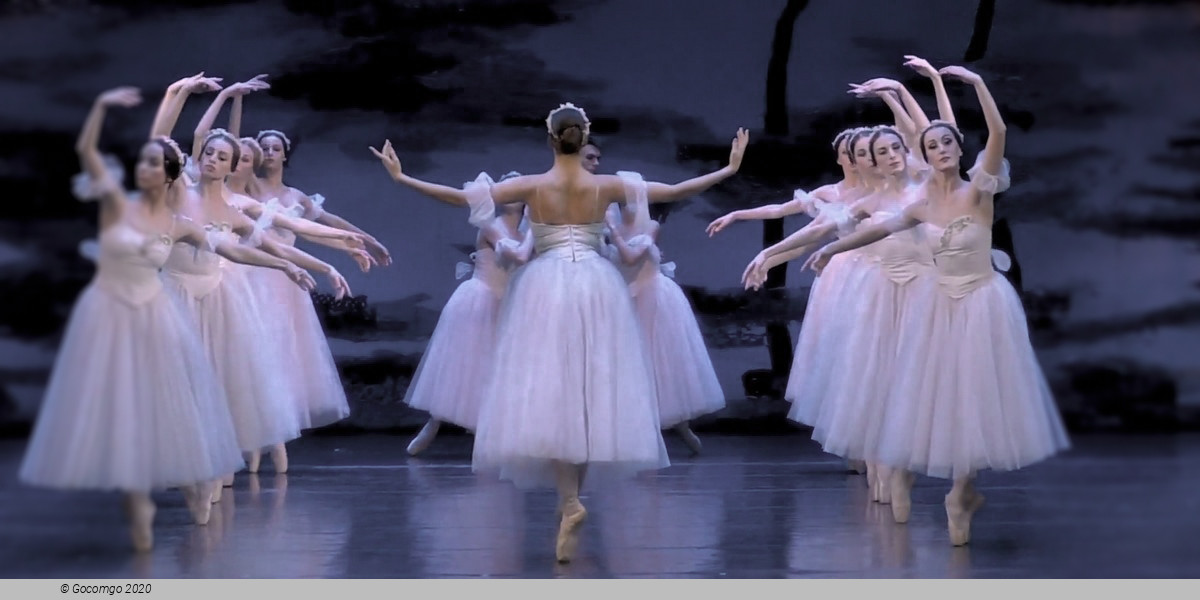
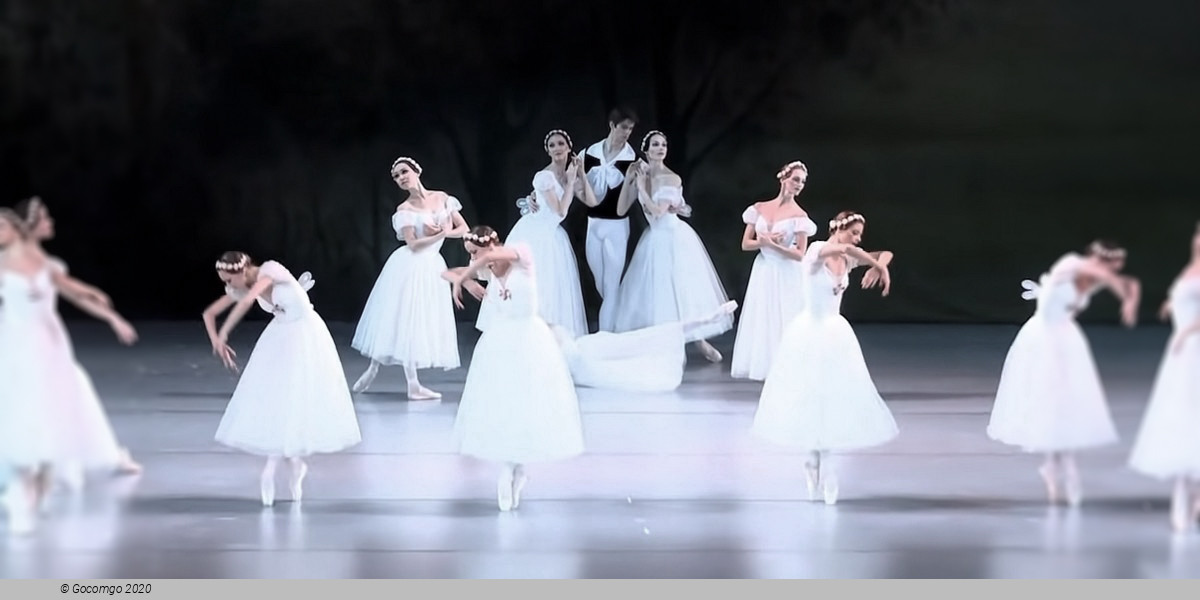
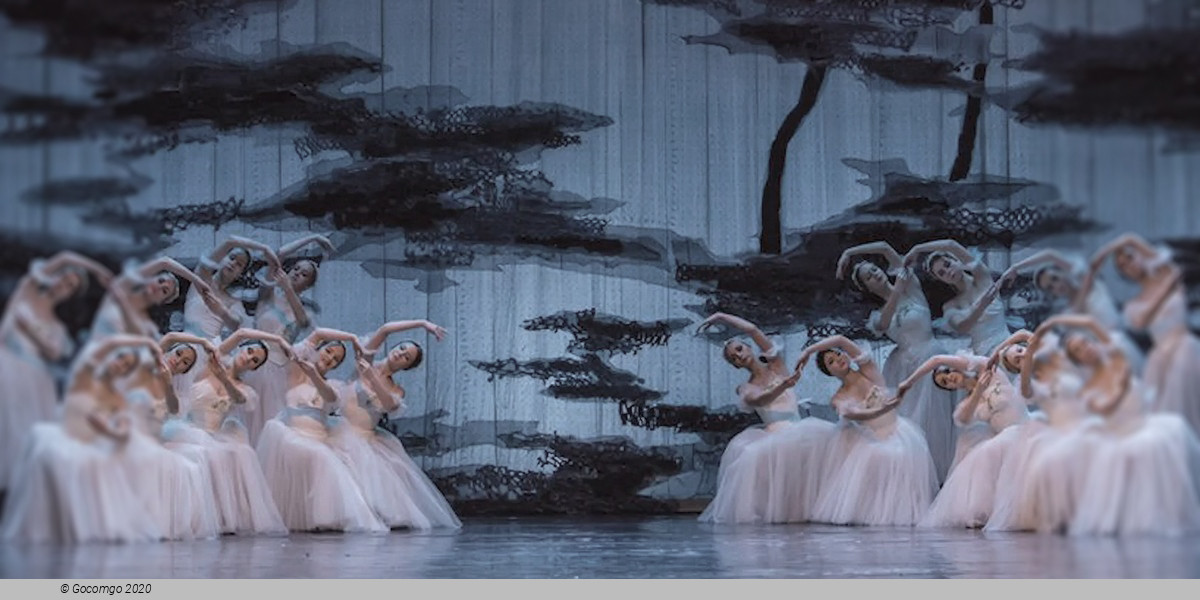
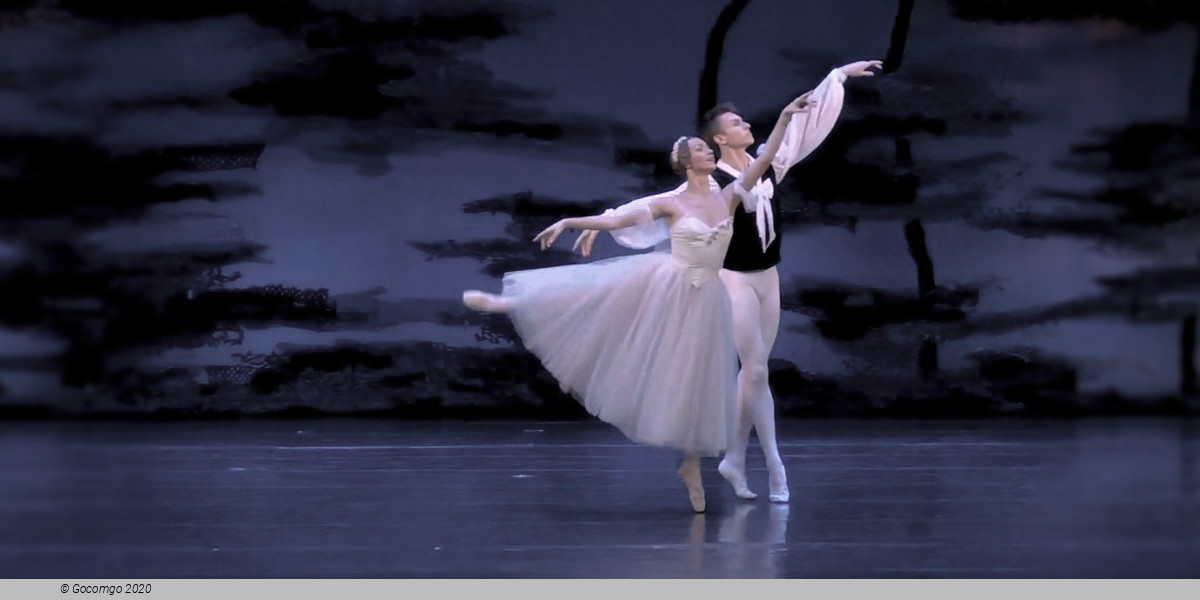
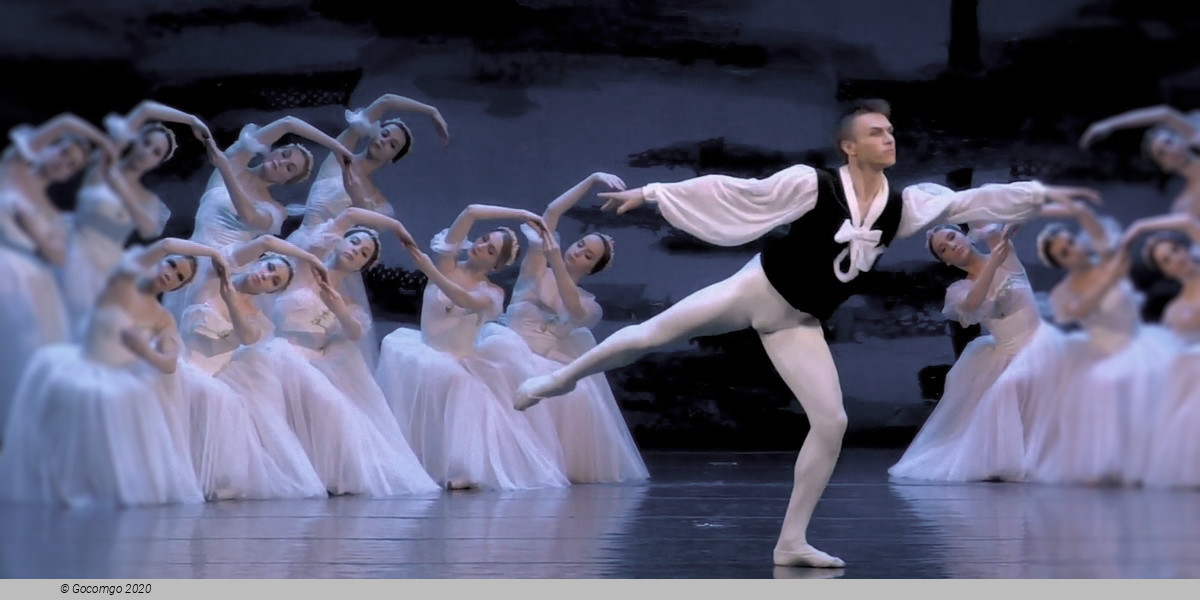
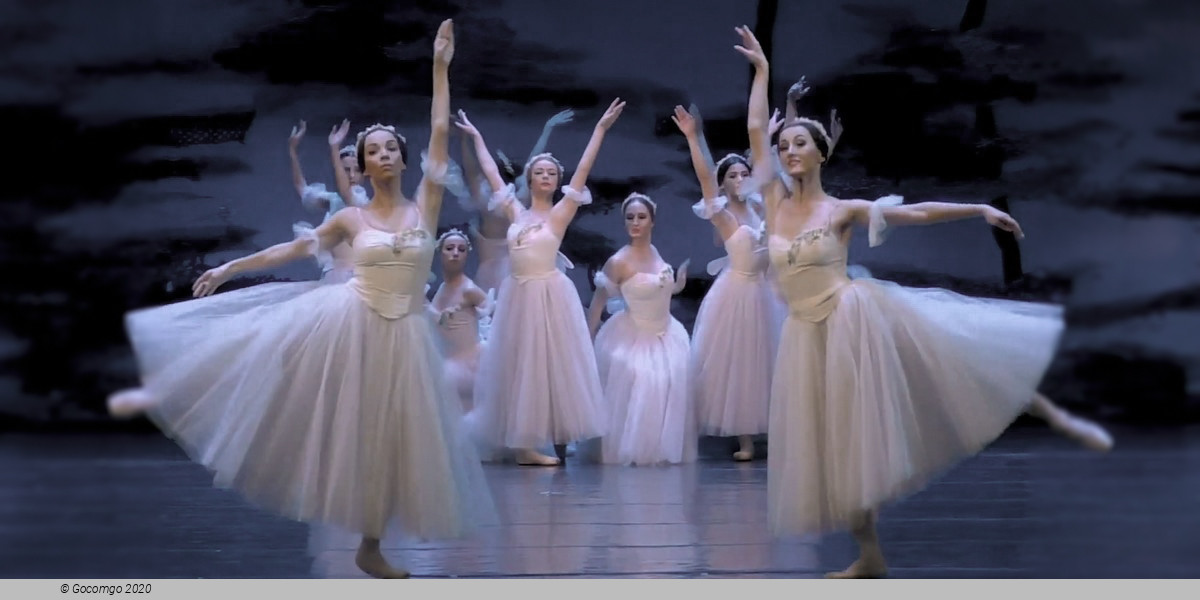
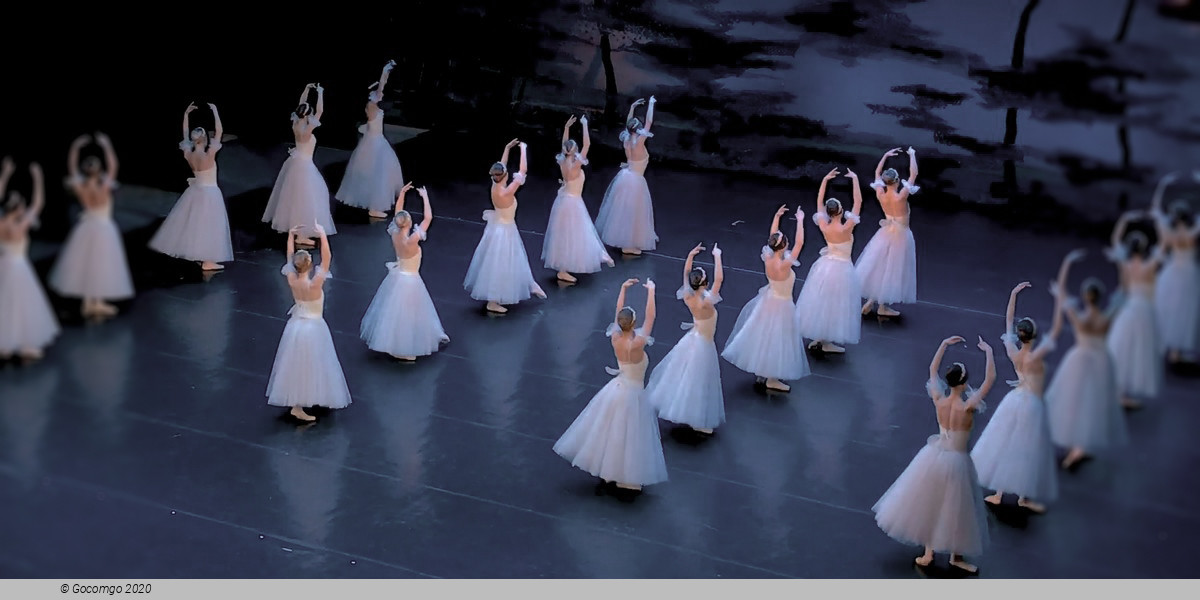
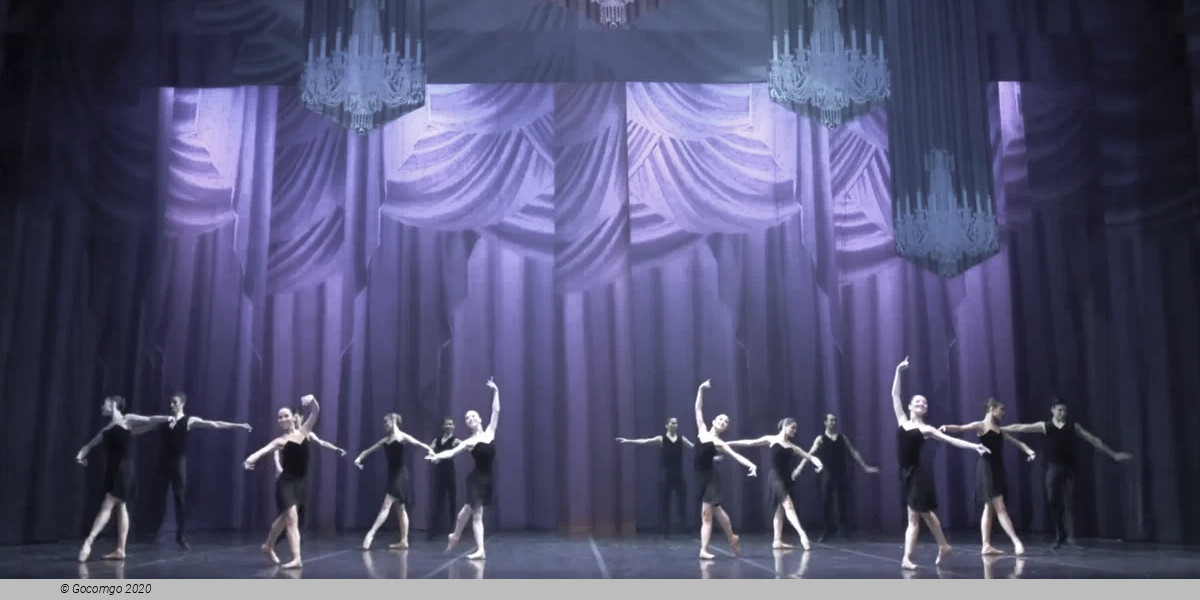
In 1908, Mikhail Fokine composed a non-narrative ballet sketch. As the choreographer wrote, it was “in the style of that long-forgotten time, when ballet was governed by poetry, when a dancer rose en pointe not to demonstrate the steel-like arch of her foot, but in order to create the impression of lightness, barely touching the ground, something ethereal and fantastical… I have tried not to surprise people with the novelty, but rather to restore the conventional ballet dancing to the point of its greatest advances. I don’t know how our ballet predecessors danced. And no one else knows that. But in my dreams this is precisely how they did dance.”

The entire suite, woven by the choreographer of fleeting visions consonant with Chopin’s music, captivate the audience by its pensive beauty.

On February 4, 1923, the last edition of Fokin was resumed in Petrograd, on May 16, 1928, A. Ya. Vaganova updated Chopiniana for the Leningrad Choreographic School, and the performance was performed at the Mariinsky Theatre (graduation performance by G. S. Ulanova). The scenery was designed by Orest Allegri.

“My Boléro,” commented Ravel, “has to stick in one’s head!”
More seriously, he explained:
“In 1928, upon request by Madame Rubinstein (Ida Rubinstein, the famous Russian actress and dancer), I composed a Bolero for an orchestra. This is a dance with a very moderate and continuously even movement, both due to its melody and to its harmony and rhythm. The rhythm is continuously marked by the drum. The element of diversity is added by the orchestral crescendo.”

Maurice Béjart describes the creation of Ravel’s work in these terms, “music that is too well-known and yet still fresh due to its simplicity. A melody (originally oriental and not Spanish) that winds slowly around itself, increasing in volume and intensity, devours the sound space and swallows it up at the end of the melody.”

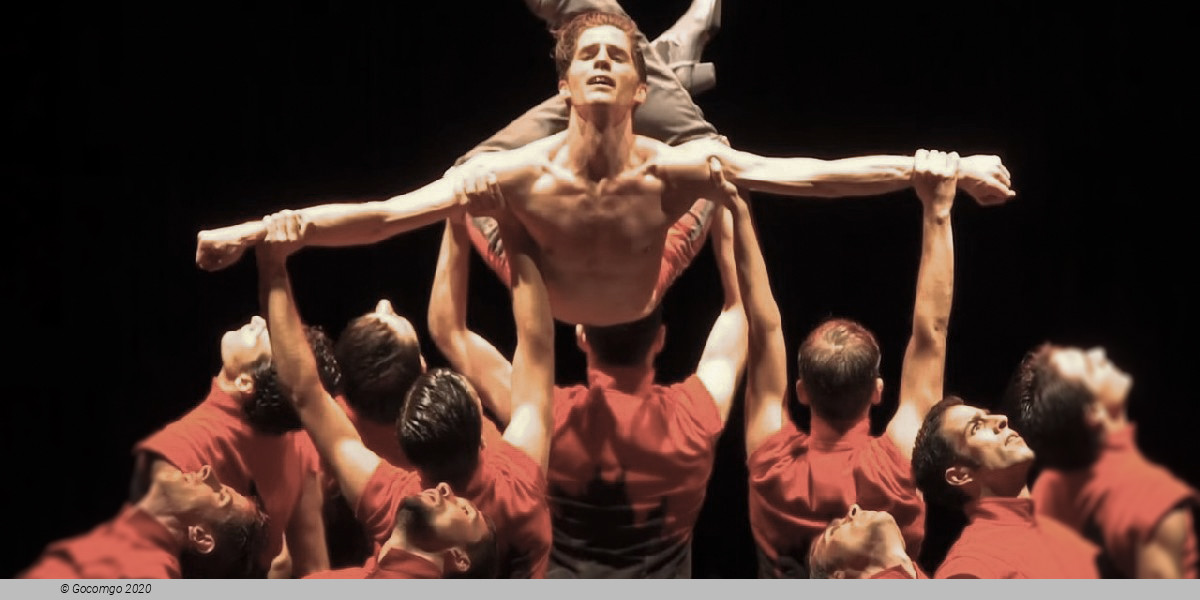
Without further describing a ballet that needs no introduction, let us simply point out that Maurice Béjart returns to the spirit of the Rite of Spring in a very different style. In this sense, unlike most artists who have illustrated Boléro choreographically before him, he spurns the easy choices of a picturesque exterior to simply – but so forcefully – express the essential.

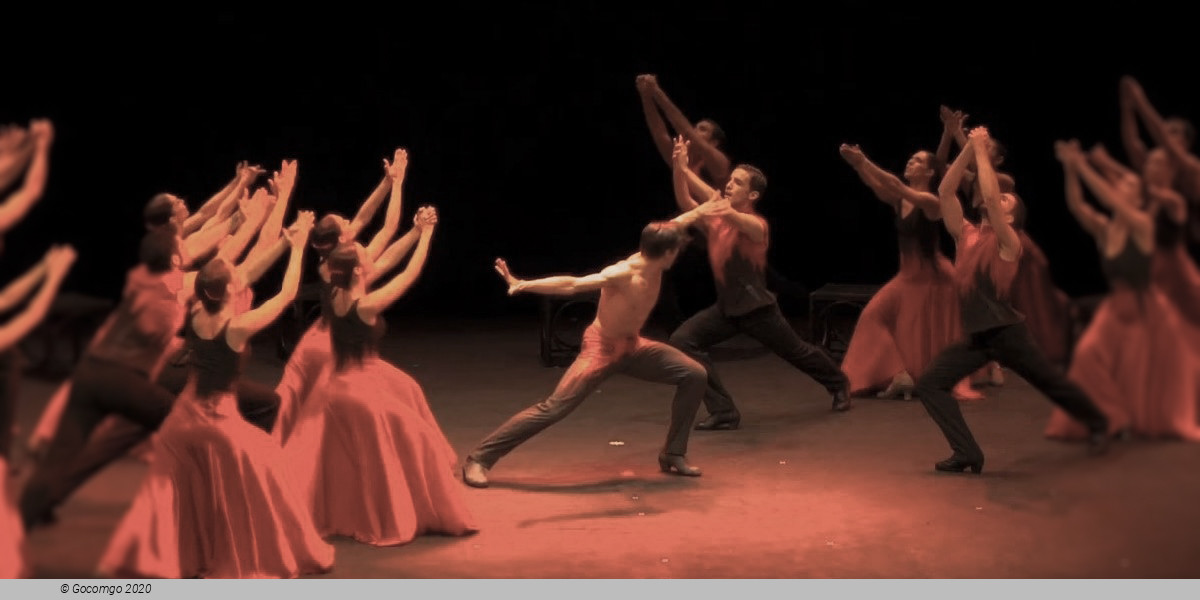
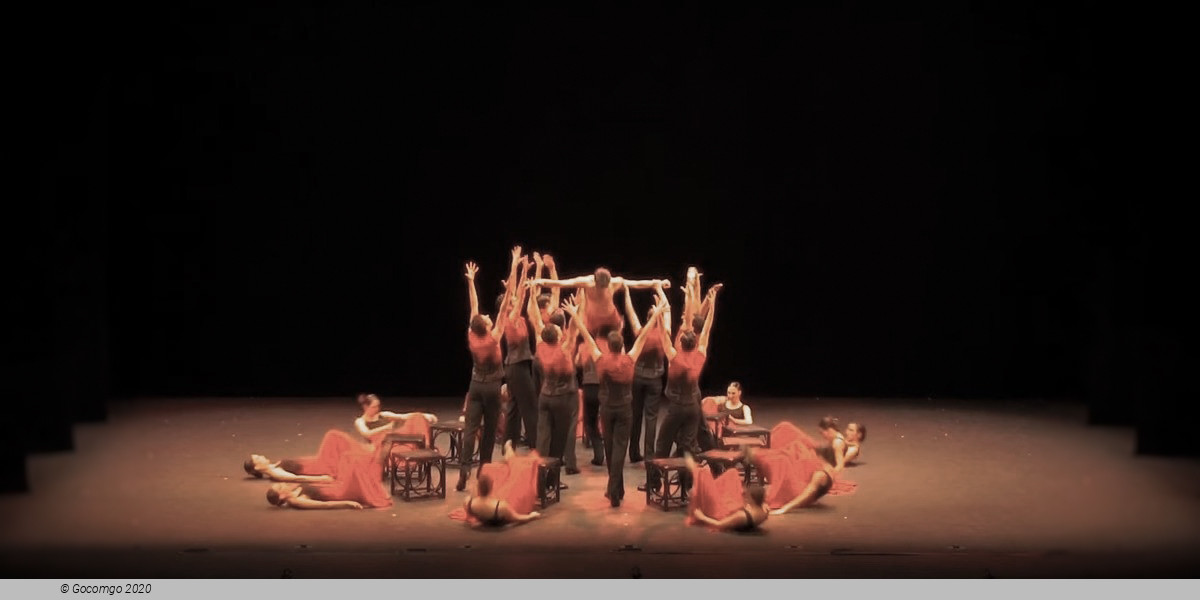
Maurice Béjart gives the central role (La Mélodie) sometimes to a female dancer and other times to a male dancer. The rhythm is interpreted by a group of male dancers.

Rediscovering Bach is a captivating concert program dedicated to the timeless music of Johann Sebastian Bach. The performance offers a fresh perspective on his masterpieces, revealing the emotional depth, architectural brilliance, and spiritual power that continue to inspire audiences around the world.

Rediscovering Bach is an immersive musical journey into the genius of Johann Sebastian Bach — one of the most influential composers in the history of Western music. This program invites audiences to experience his works not as distant monuments of the Baroque era, but as living, breathing art filled with passion, humanity, and profound expression.

Through carefully selected compositions — from intricate instrumental works to powerful sacred pieces — the concert reveals Bach’s extraordinary mastery of counterpoint, harmony, and form. Each piece unfolds with clarity and intensity, demonstrating how his music transcends time and cultural boundaries.

Rediscovering Bach highlights both the intellectual brilliance and the emotional richness of his творчество, offering moments of contemplation, dramatic contrast, and uplifting joy. Whether you are a devoted admirer or encountering his music for the first time, this program opens a renewed connection to Bach’s enduring legacy.

History
Premiere of this production: 30 November 1906, Mariinsky Theatre, Saint Petersburg, Russia

Chopiniana (Les Sylphides) is a short, non-narrative ballet blanc to piano music by Frédéric Chopin, selected and orchestrated by Alexander Glazunov.

Premiere of this production: 22 November 1928, Paris Opéra

Boléro is a one-movement orchestral piece by the French composer Maurice Ravel (1875–1937). Originally composed as a ballet commissioned by Russian actress and dancer Ida Rubinstein, the piece, which premiered in 1928, is Ravel's most famous musical composition.

Venue Info

Abay Kazakh State Opera and Ballet Theatre - Almaty
Location   St. Kabanbai batyra, 110

Modern GATOB named after Abay - one of the largest theaters of the Eurasian space in which creative structure, along with the glorified masters of a scene perfect the art and young talents.

The building of the Kazakh state academic theatre named Abay containing 793 seats is one of the most known sights of the city of Almaty.

The Decision of Board of the National Commissariat of Education Kazakh The Assr of September 29, 1933 in Alma-Ata has Created the Musical Studio Consisting of Fifty Actors, Twenty Musicians Symphonic and Twelve People National Orchestras

On January 13, 1934 the first public performance of the musical comedy "Ayman-Sholpan" put by forces of musical studio according to M. O. Auezov's play, which has marked according to Narkompros's decision, the birth of the first "… the Kazakh musical opera and ballet theatre" has taken place.

Construction of the building of theater on the project of the Moscow architect N. A. Kruglov whose work has been recognized as the best in the All-Union competition announced on this occasion in 1933, has begun in 1936 and has been finished in 1941 by architects N. A. Prostakov and T. K. Basenov

On November 7, 1941 the Theatre has opened in own building. Same year the theater has received the status academic, and in 1945 the name of Abay has been appropriated to him.

From June, 1995 to December 13, 2000 in theatre the general reconstruction which has kept the main architectural style – the empire style which is combined with the Italian classicism and traditional elements of a national form in architecture of Kazakhstan has been carried out.

In general the decor and the main art and style solutions of a construction have been kept, modern finishing materials are added, and the stucco molding of the foyer of the second floor and auditorium has included elements of the ornament decorating a suit of "The gold person". The wealth and a variety of traditions of the Kazakh folk art have found application and in finishing of other interiors of theatre.

Important Info
Type: Ballet
City: Almaty, Kazakhstan
Starts at: 19:00
Acts: 1
Top of page